Press Release
HKU Ecologist Discovers that Changes in Global Biodiversity Pattern Are Driven by Temperature and Climate
28 Jun 2012
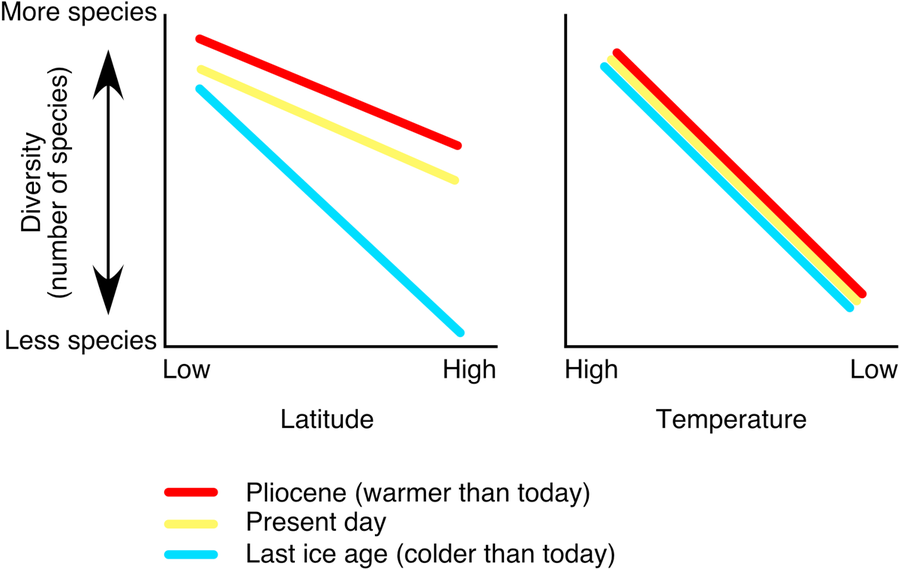
Figure 1 is a simplified graph to explain latitude-biodiversity (left) and temperature-biodiversity (right) relationships. Note large differences of the latitudinal diversity patterns
among the three time slices of present day (orange), last ice age (18,000 years ago, a period colder than today: blue), and 3 million years ago (Pliocene, a period warmer than
today: green), and remarkable similarity of the temperature-diversity patterns. Temperature-diversity lines of three time slices are almost completely overlapped, suggesting
strong and constant temperature control of biodiversity.
Image
among the three time slices of present day (orange), last ice age (18,000 years ago, a period colder than today: blue), and 3 million years ago (Pliocene, a period warmer than
today: green), and remarkable similarity of the temperature-diversity patterns. Temperature-diversity lines of three time slices are almost completely overlapped, suggesting
strong and constant temperature control of biodiversity.
Image
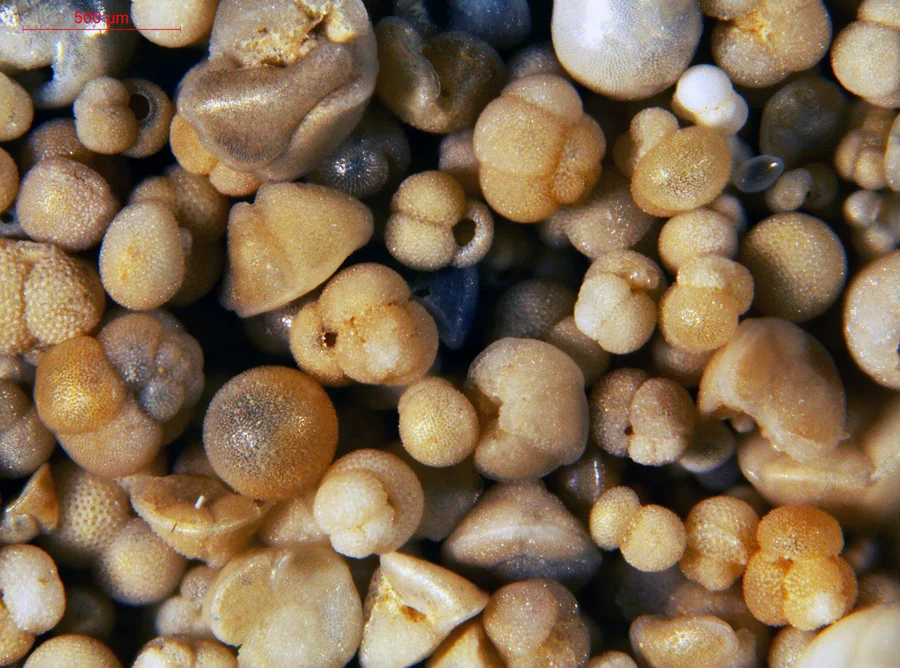
Image 1: This image shows deep-sea sediment including numerous fossil zooplankton (Foraminifera).
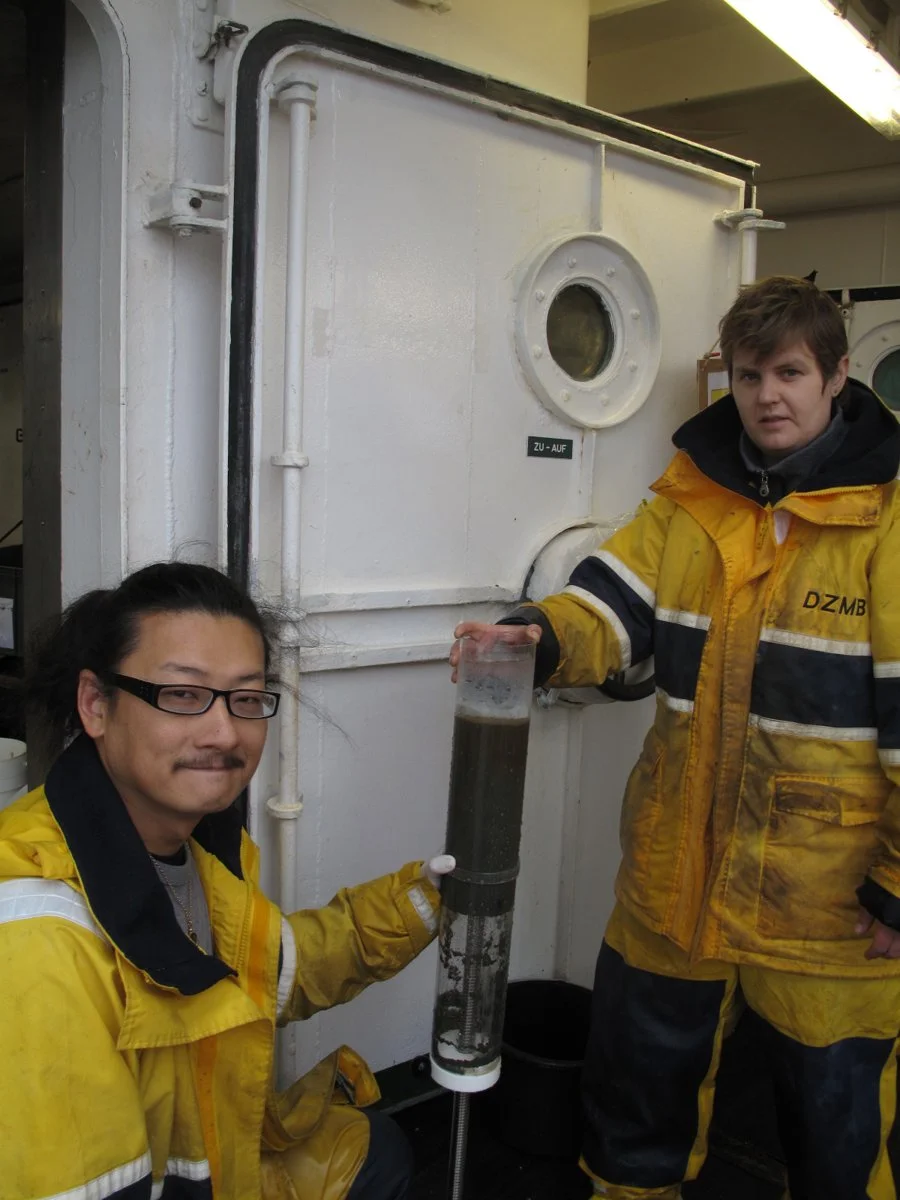
Image 2: Dr Moriaki Yasuhara (left) and a research colleague studying a core of
sediment sampled from the deep sea.
sediment sampled from the deep sea.