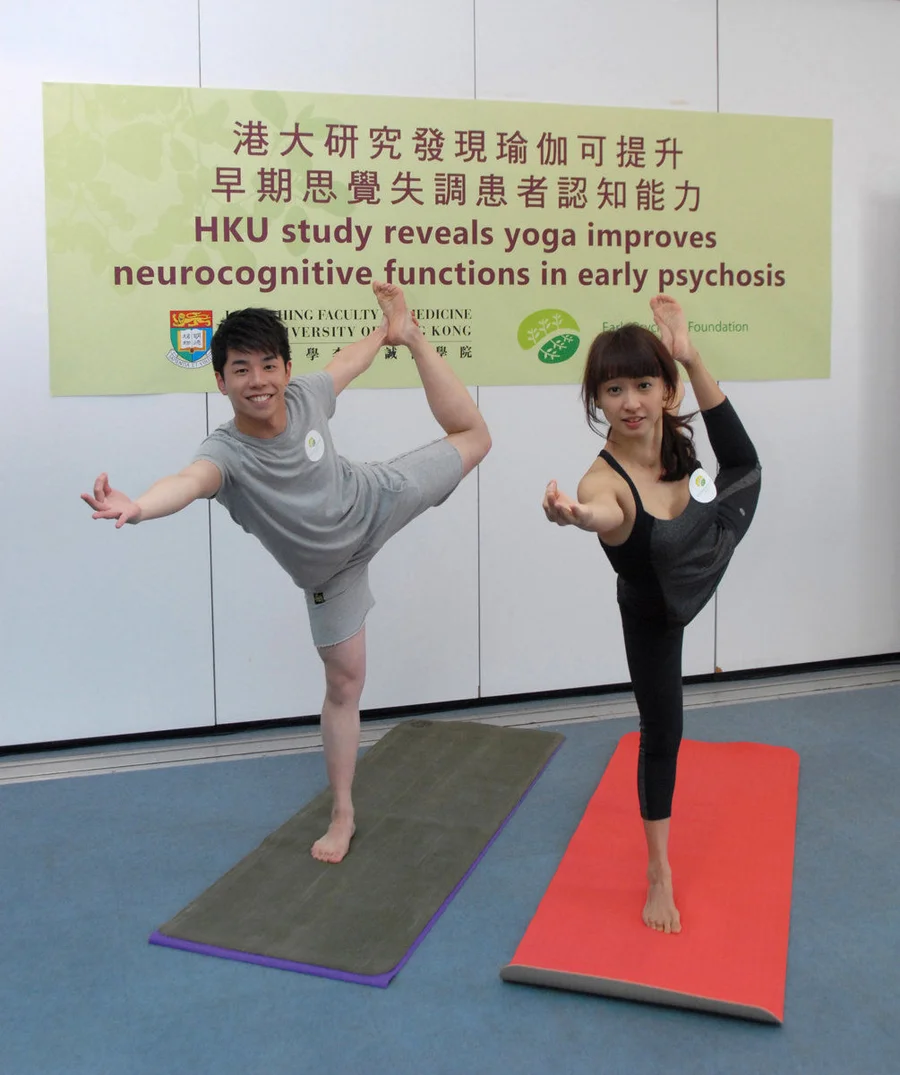
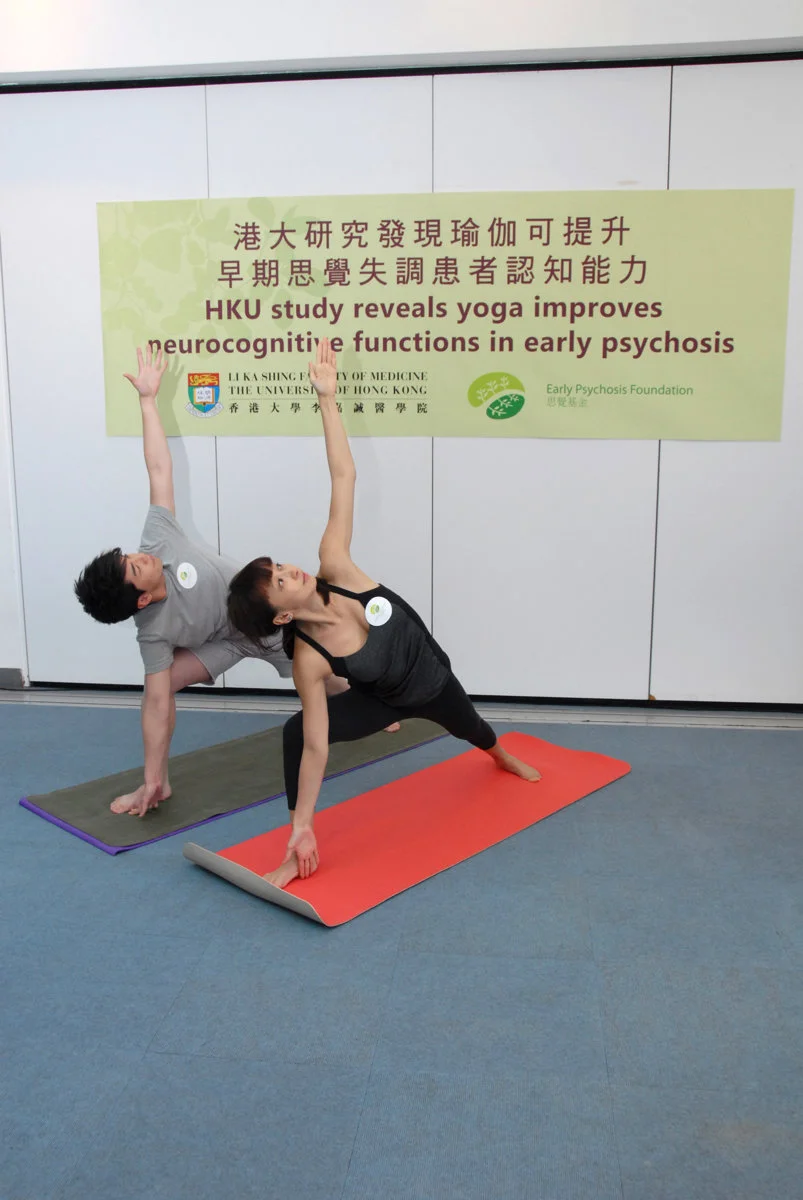
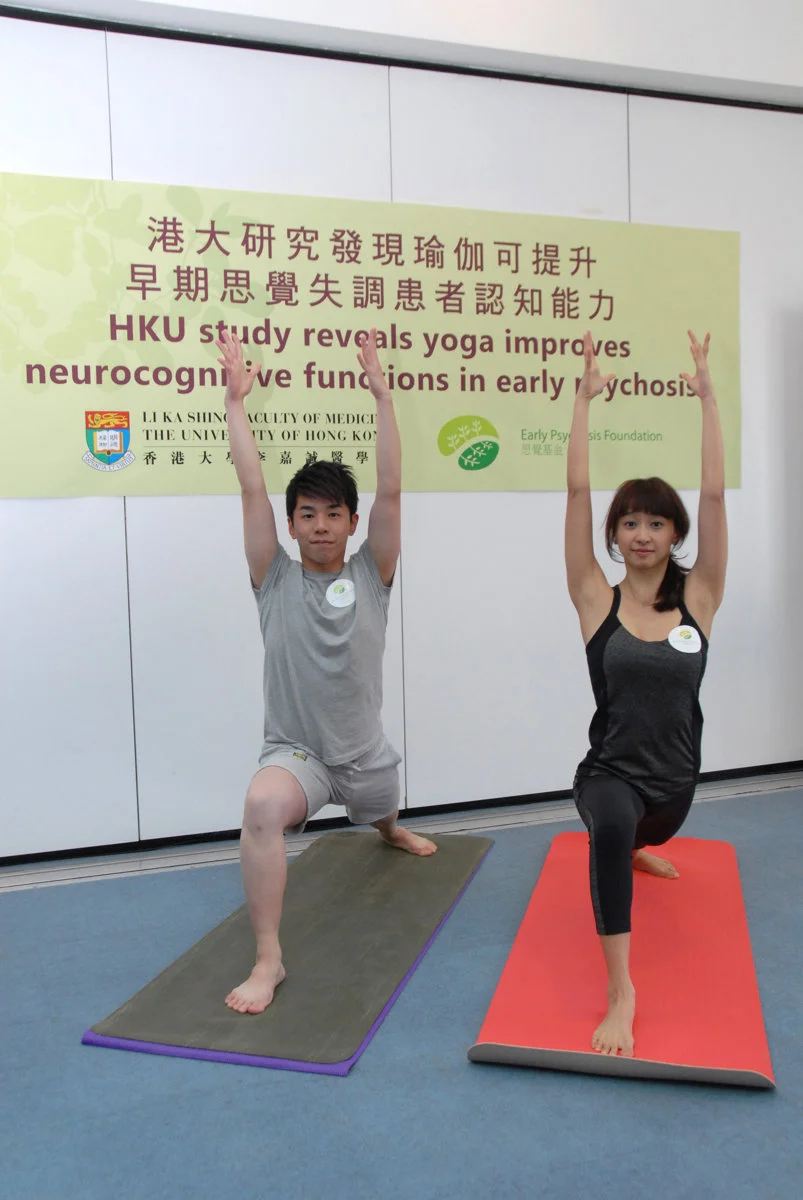
Psychosis can cause functional degeneration in many aspects, including neurocognitive degeneration in memory and attention. Though medication can effectively controls psychotic symptoms such as delusions and hallucinations, its effects on other associated dysfunctions are less remarkable. Patients’ daily lives and work performance are seriously affected. A study by the Department of Psychiatry, Li Ka Shing Faculty of Medicine, The University of Hong Kong (HKU) reveals that yoga can help improve the memory, attention, depressive symptoms and other clinical symptoms of patients at early stages of psychosis. This breakthrough overcomes the limitations of medication.
Research implications
Professor Eric Chen Yu-hai, Clinical Professor and Head, Department of Psychiatry, Li Ka Shing Faculty of Medicine, HKU, leads the research and says, “This is the first clinical research worldwide on the application of yoga on early psychosis patients. The research results show that yoga can complement medication in treating neurocognitive degeneration.”
Research methods and results
Since July 2010, the research team had recruited participants and randomly divided them into two groups. One group received a 12-week yoga intervention in addition to their existing medications, while the control group received their existing medications only. Both before and after the study period, all the participants received assessments of neurocognitive functions and clinical symptoms, as well as Magnetic Resonance Imaging (MRI) of the brain.
60 psychosis patients completed the study. Results of the study show that patients of the yoga group have significant improvement in long-term and short-term memory, attention and visual-motor coordination after the 12-week intervention. Furthermore, their overall clinical symptoms and depressive symptoms have reduced. MRI data show that the brain area (post-central gyrus) related to somatosensory functions has thickened and the volume of the brain area (corpus callosum) related to information exchanges between the two hemispheres has increased. These indicate that patients’ movement and senses, as well as their abilities to receive and process information have all improved.
FitMind Yoga
Although the study demonstrates that yoga brings substantial benefits to early psychosis patients, there are great challenges as to its further promotion to patients who have lost the interest and motivation in daily life because of the illness. Targeting at patients’ problems of weak physical and learning abilities, the Department of Psychiatry at Li Ka Shing Faculty of Medicine, HKU jointly developed a simple 23-step yoga sequence named “FitMind Yoga 23-postures” with the Early Psychosis Foundation (EPISO) to enable patients to practise continuously in order to improve their conditions.
In the next few months, the Department of Psychiatry in HKU will organise a series of charity activities with EPISO to promote “FitMind Yoga”, including free yoga classes, distribution of promotional pamphlets as well as instructional yoga videos to patients for self-learning. Besides, a 3D photo exhibition named “FitMind is Attitude” will be held at Times Square, Causeway Bay from March 11 to 16, and a “FitMind Yoga Mega Fund-raising Event” at Diocesan Boys' School will be held on April 6. For more details of the “FitMind Yoga” campaign, please visit the website https://fitmind.episo.org/. For more details about EPISO, please visit https://www.episo.org/.
Please visit the website at https://www.med.hku.hk/v1/news-and-events/press-releases/ for press photos and powerpoint presentation.