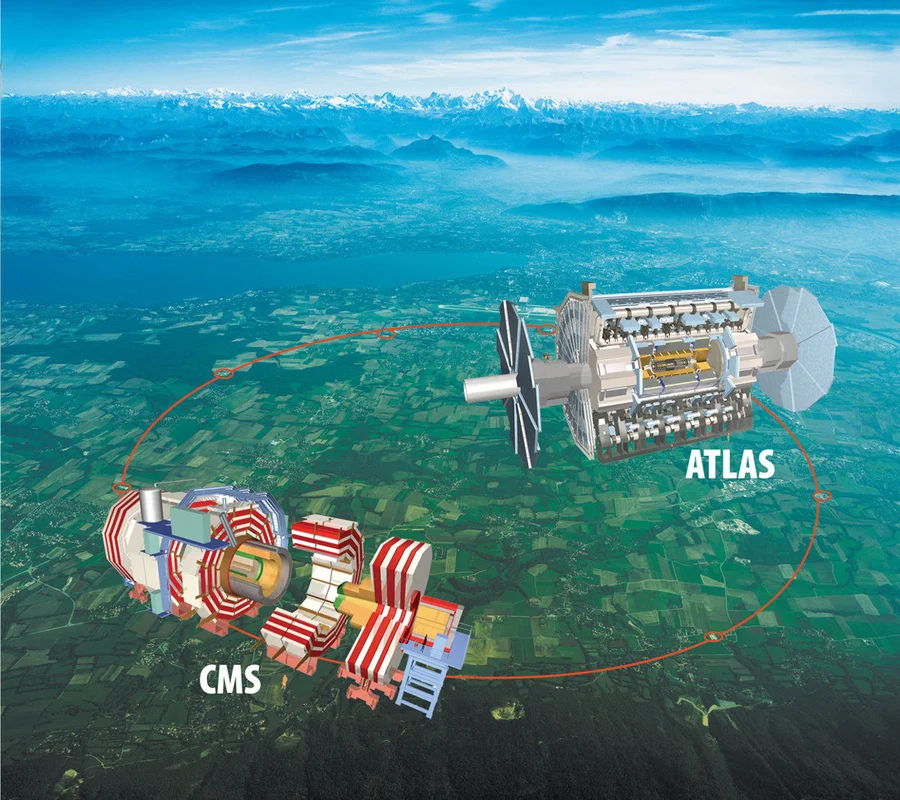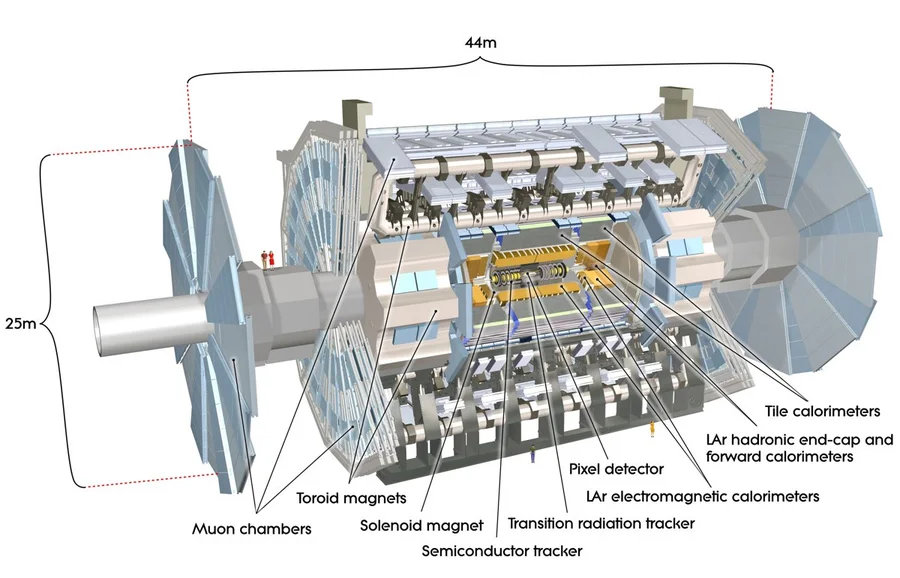
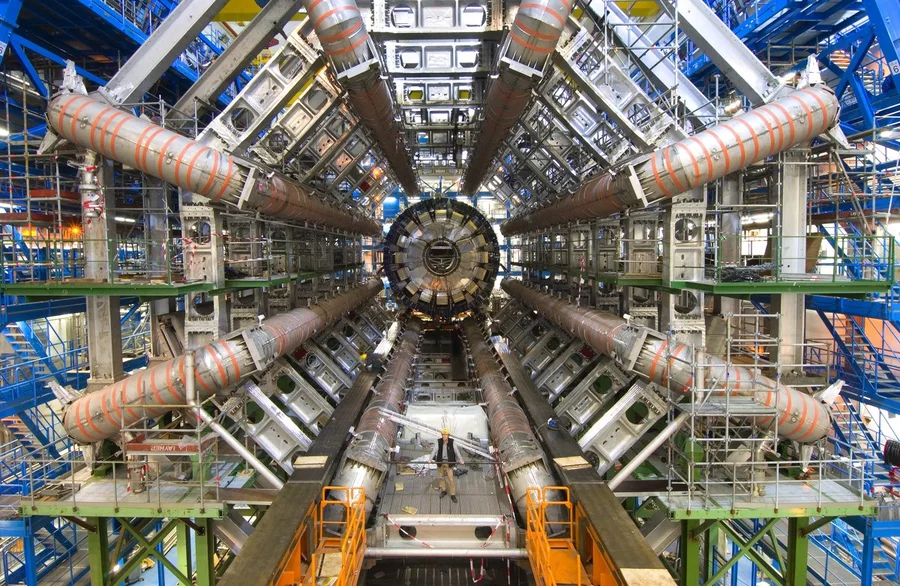
A team of physicists from Hong Kong has now formally joined one of the most prestigious physics experiments in the world. Following a unanimous vote of approval today by its Collaboration Board, ATLAS has admitted the Hong Kong team as a member. The ATLAS Collaboration operates one of the largest particle detectors in the world, located at the Large Hadron Collider (LHC), the world’s highest energy particle accelerator at CERN, Switzerland. In 2012, the ATLAS team – along with the CMS Collaboration – co-discovered the Higgs boson, or so-called ‘God Particle’. The gigantic but sensitive and precise ATLAS detector, together with the unprecedentedly high collision energy and luminosity of the LHC, make it possible to search for fundamentally new physics, such as dark matter, hidden extra dimensions, and supersymmetry – a proposed symmetry among elementary particles. The LHC is currently undergoing an upgrade, targeting a substantial increase in beam energy and intensity in a year’s time. It is widely expected that the discovery of the Higgs boson is only the beginning of an era of new breakthroughs in fundamental physics. All these exciting opportunities are now opened up to scientists and students from Hong Kong.
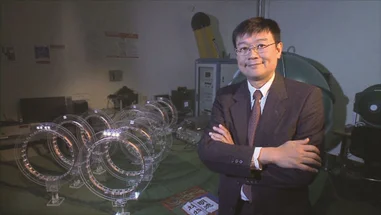
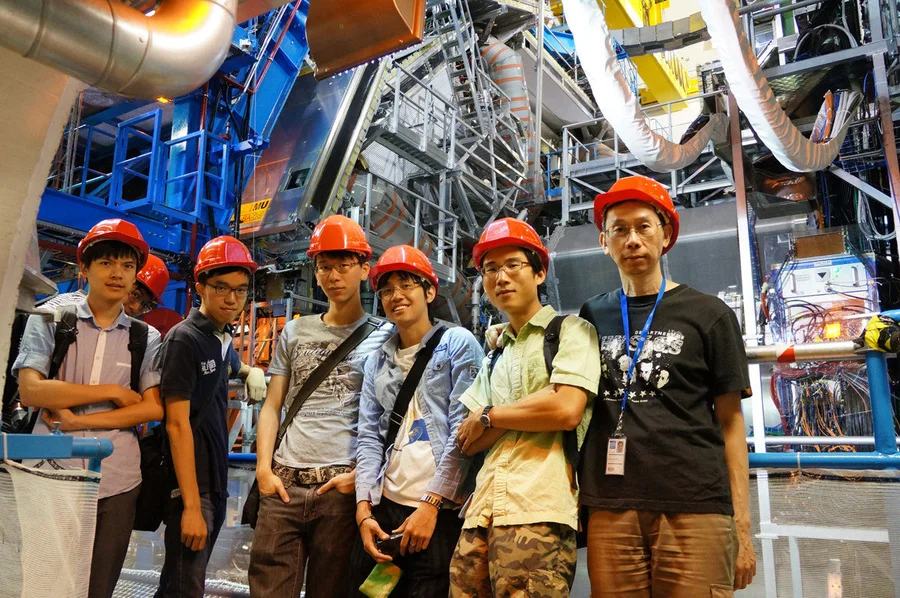
The Hong Kong team is led by Professor Chu Ming-chung of the Chinese University of Hong Kong (CUHK), with members also from the University of Hong Kong (HKU) and the Hong Kong University of Science and Technology (HKUST). Other than Professor Chu, the Hong Kong team comprises Assistant Professor Luis Flores Castillo (CUHK), Research Assistant Professor Kirill Prokofiev (HKUST) who will assume the position in September, Assistant Professor Tu Yanjun (HKU) who will assume the position in September, four graduate students and two research assistants. Four undergraduate students from the three institutes are also working at CERN this summer. More graduate students and postdoctoral fellows will be recruited to the team shortly.
“It’s intoxicating to be working at CERN, interacting with top scientists from all over the globe, and building the largest experiment in the world”, said Leung Shing-chau, a graduate student in the team who worked at CERN for a summer two years ago when he was an undergraduate student.