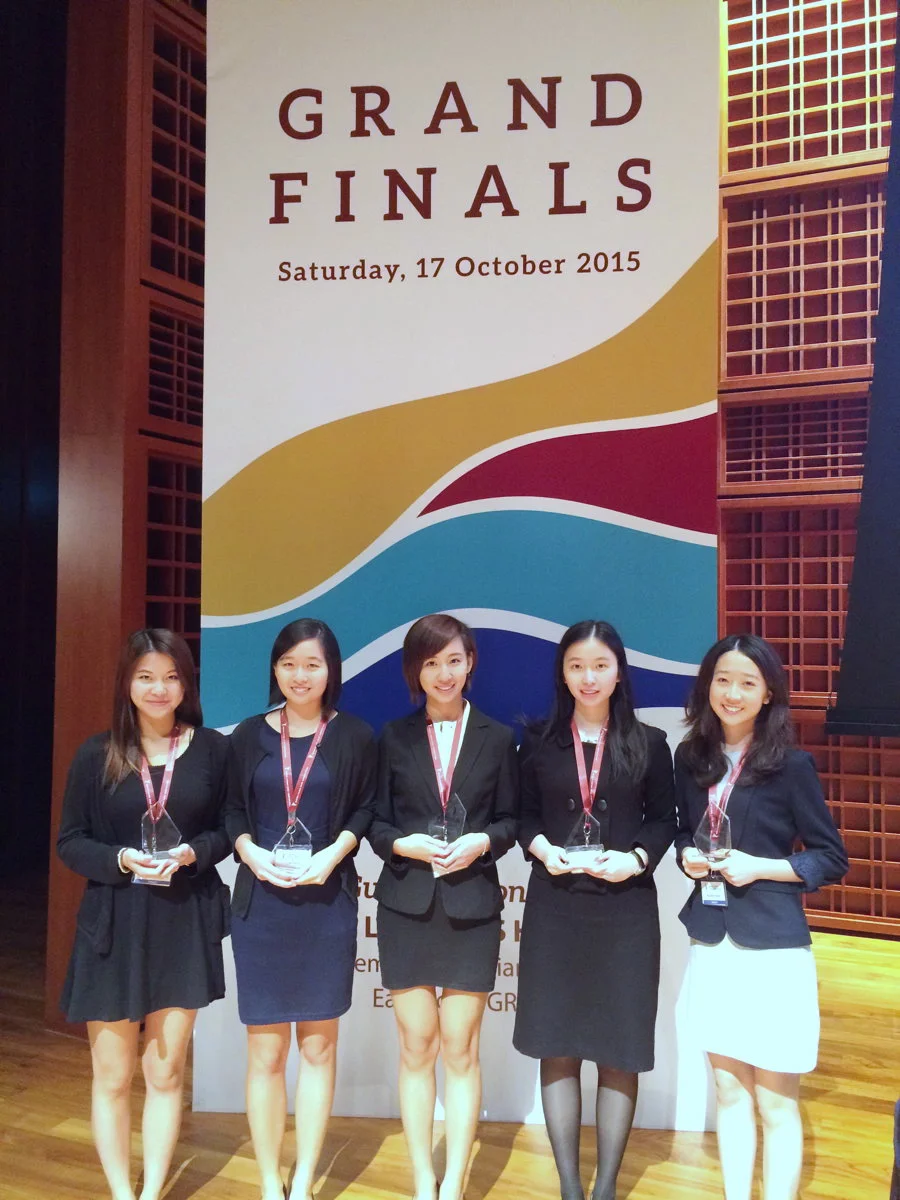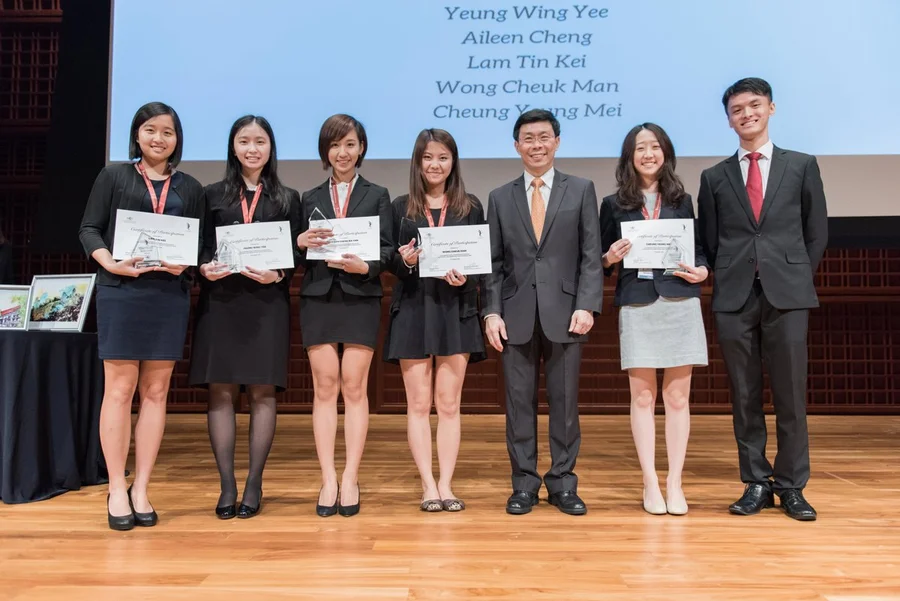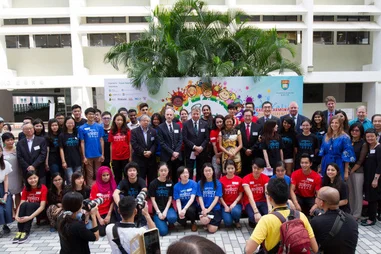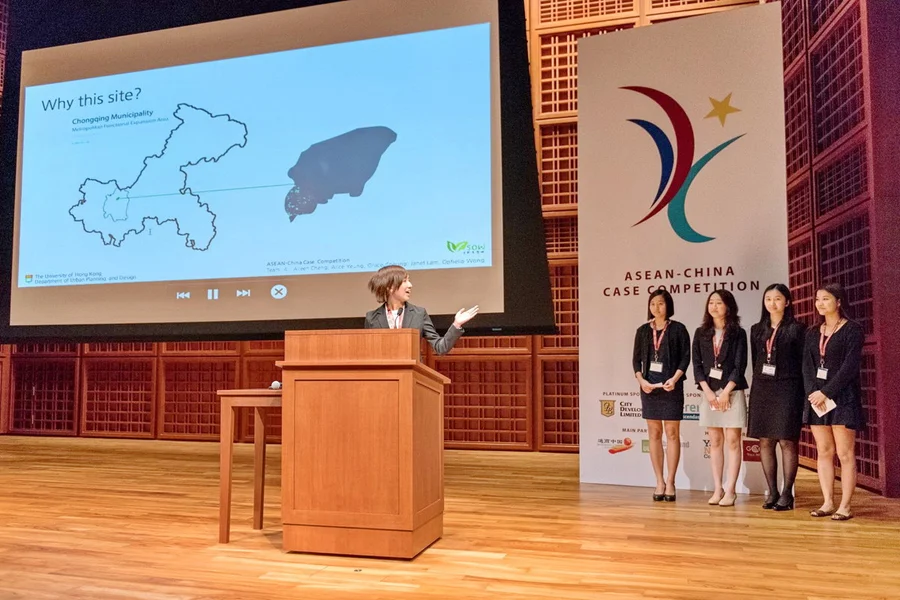
A team of Yr. 4 students of the new BA (Urban Studies) programme of the University of Hong Kong (HKU) won the second place in the Grand Finals of the ASEAN-China Case Competition 2015 organised by the Yale-NUS Global China Connection of Yale-NUS College in Singapore on October 17, 2015.
The ASEAN-China Case Competition 2015 aims to develop relationships between undergraduate students and industry leaders in the region to better understand China and to seize the fresh opportunities presented by the rising nation.
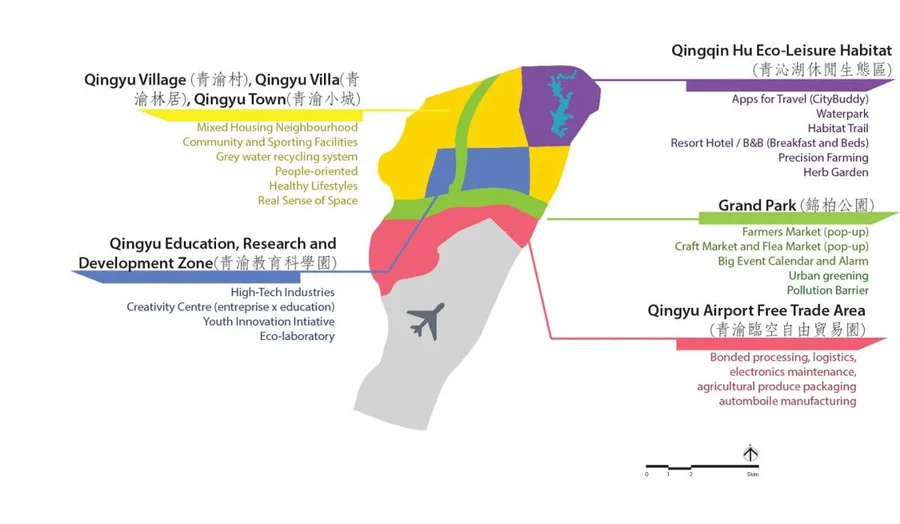
Themed “Urbanisation in China: Building Eco-Cities”, the competition required participating teams to assume the perspective of a non-governmental urban development consultant and propose an implementation plan for an eco-city development project in the Liangjiang New Area to the Development and Reform Commission of the government of Chongqing. The plan should be environmentally sustainable, economically viable, while giving consideration to social aspects and liveability. The competition was carried out in three stages, with the initial stage requiring submission of a written proposal and a video online. Eight teams were then shortlisted and invited to Singapore for the Semi-finals, in which they were asked to develop a final proposal for viable, innovative and practical solutions on how to build this eco-city. Three teams were eventually selected to enter the Grand Finals and to present their final proposal to ten judges comprising of government officials, practitioners and professors.
The Case Competition had over 400 undergraduate participants from more than 60 universities in ASEAN and beyond in teams of three to five. 89 teams signed up for the competition. Eight Teams with participants from Singapore, Hong Kong, UK, Philippines and Thailand were shortlisted for the Semi-finals in Singapore on October 16, and finally, 3 teams were selected for the Grand Finals on October 17. The team from Yale-NUS won the first place, HKU BA (Urban Studies) team won the second place, and NUS Business School team came third.