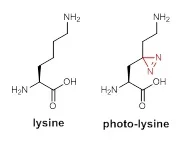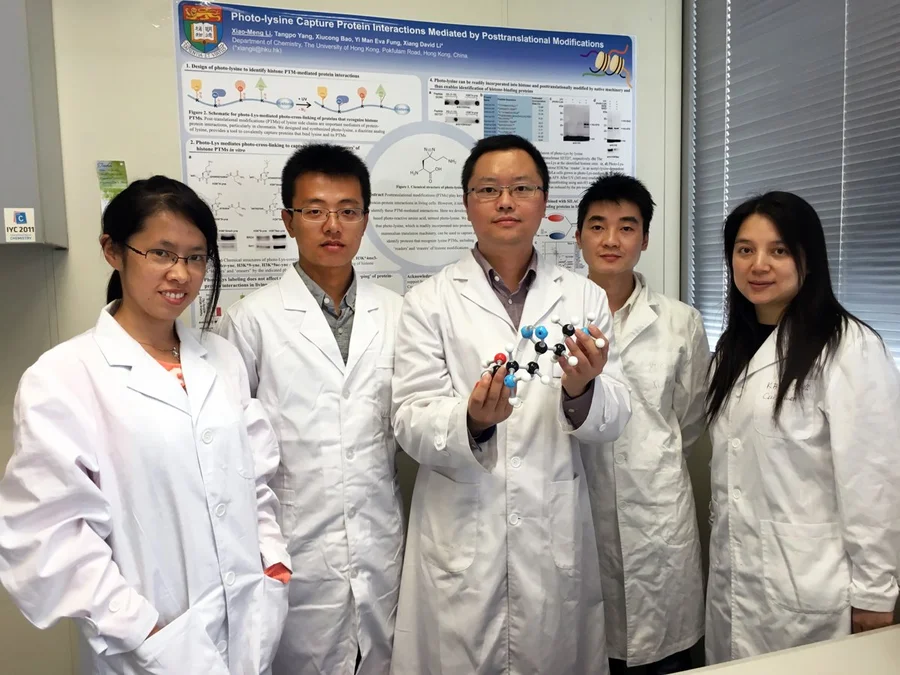
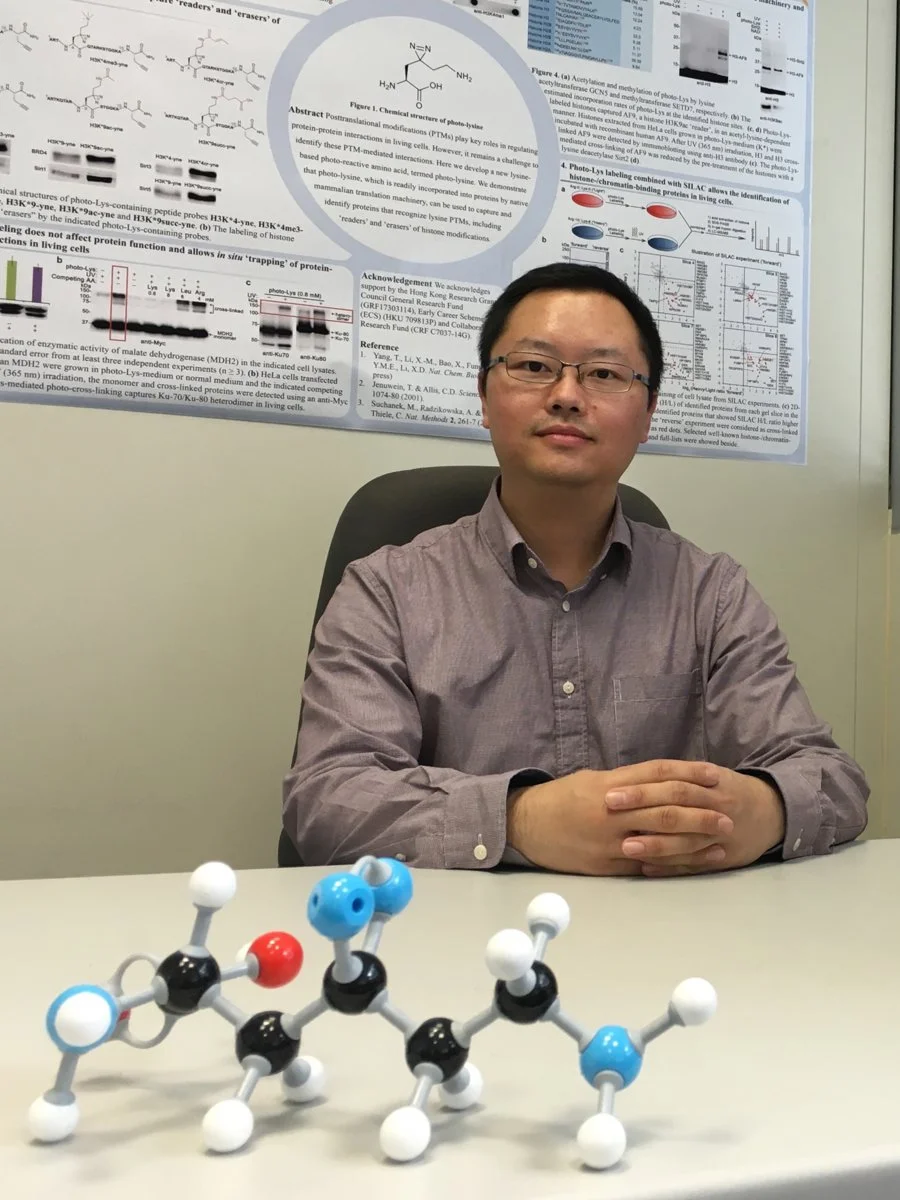
A research group led by Dr David Li Xiang from Department of Chemistry, the University of Hong Kong, has developed a novel chemical tool for deciphering complex protein networks of a cell — the elementary unit of life. The disorder of such cellular networks often leads to severe human diseases such as cancer and Alzheimer's diseases. The findings were recently published in a top-class scientific journal — Nature Chemical Biology. This is the first time that a study led by Hong Kong researchers is published in this prestigious journal.
The main components of a cell are macromolecules called proteins; they are chief actors of most cellular processes and determine the structure and function of the cell. Like most jobs in human society, the ‘jobs’ in the cell cannot be done by one single protein, but require a teamwork of thousands of different proteins, which physically interact to form protein-protein interaction networks or protein ‘social networks’. Errors in the regulation of these protein interactions can cause severe human diseases such as cancer. The mapping of proteins and their interactions are thus a fundamental challenge in modern biology with important applications in disease diagnosis and therapy.