Conventional stormwater drainage systems consist of extensive networks of drains and pipes that divert stormwater away from the streets. They primarily focus on flood control and do not address environmental needs. Hong Kong has long been adopting the conventional model to solve drainage problems.
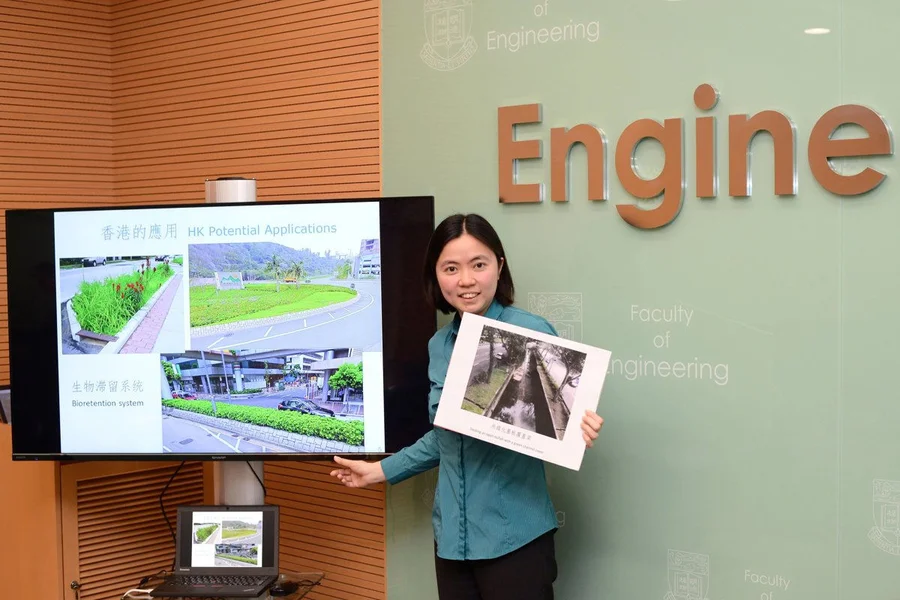
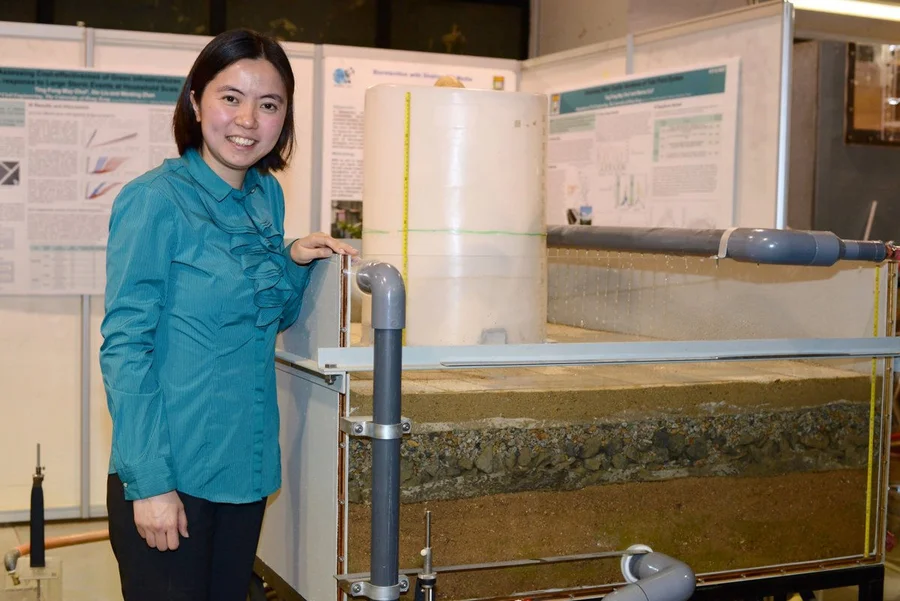
Since the last decade, there has been rising interest worldwide in implementing sustainable stormwater drainage systems (SuDS) to reduce the environmental impact. SuDS make use of several techniques such as bioretention systems, green roofs and porous pavements. These features, when built over a wide area, can retain and slowly release water, reducing peak flows into the drainage system. Water quality is also improved. SuDS also provide many other potential benefits such as greening, increasing freshwater supply and mitigating heat island effect.
SuDS have been adopted in various countries such as the U.S., Australia and Singapore for over a decade. They may have different emphases depending on local needs. For example, Philadelphia in the U.S. and Melbourne in Australia may focus more on ecological conversation and restoration, while Singapore may focus more on city greening and creating recreational opportunities. Singapore has completed 27 SuDS projects, the number will increase to 100 by 2030.
HK, on the other hand, has only very limited SuDS applications. There are a few experimental projects of porous pavements. The current green roof designs do not focus on stormwater control. There has not yet been any comprehensive, long-term plan and strategy in adopting SuDS in HK.