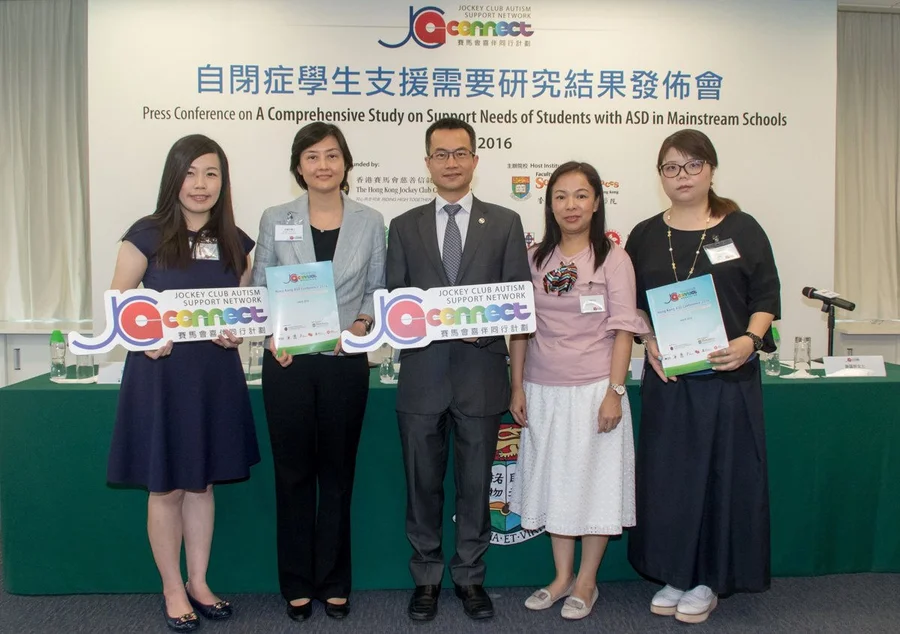
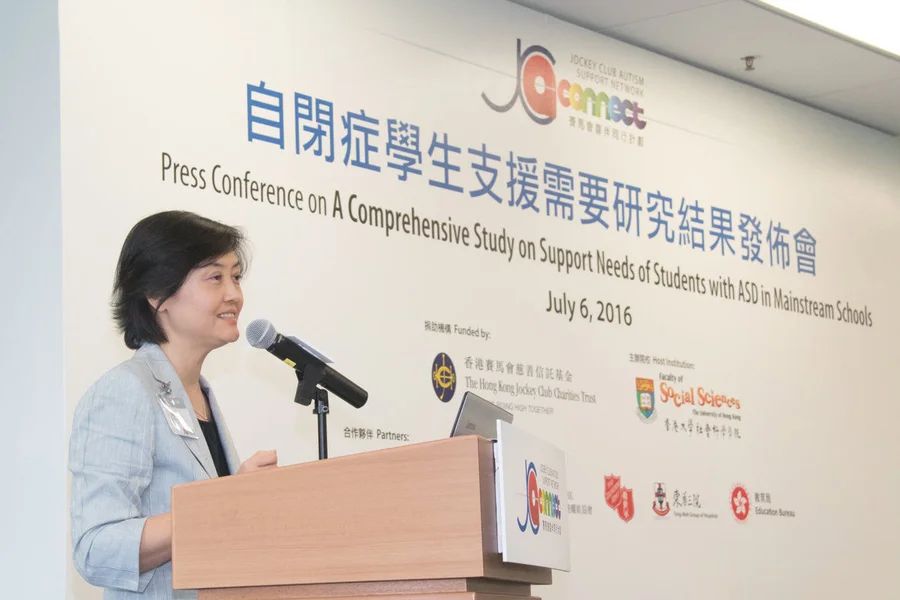
Thus students with ASD show significant delay in their development of adaptive behaviours at all stages of schooling when compared to same-age peers. Appropriate support strategies are required to help them overcome behavioural, emotional and learning obstacles in order for them to participate in school life and develop their potentials. It has also been observed that individual students’ characteristics and support needs vary a lot. Another important finding is that although school personnel and parents display a certain level of knowledge and positive attitudes in the education of the students, they lack confidence in putting the related knowledge into use effectively in everyday problem-solving (primary school personnel 12%, secondary school personnel 63%; primary school parents 32%, secondary school parents 36%).
The present findings clearly point to the fact that even though educators and parents have gained increased knowledge about ASD in recent years, in order to effectively realize inclusive education for these students, related professional support should be strengthened in three aspects. Firstly, targeted training should be carried out to help students overcome obstacles brought about by the ASD condition. Secondly, in view of students’ individual differences, comprehensive and individualized needs assessments should be given emphasis to come up with the most suitable training plans for individual students. Lastly, regarding support for school personnel and parents, the coaching model should be given greater consideration, where demonstration during student training sessions as well as pre- and post-session consultation would help enhance teachers’ and parents’ ability to apply the related knowledge to everyday situations.
The School Support Component of the “JC A-Connect: Jockey Club Autism Support Network” covers the above three directions of development. Through school-based group training delivered by NGO professionals, students benefit from three-year targeted training which enhances their adaptive skills. In the process, trainers play the role of coaches and collaborate closely with school personnel, such that effective practices in groups could be generalized to the classroom and school environments. The Project also contains parent support and peer programme elements, which help to broaden the context of student support and effects.
Mr. Leong Cheung, Executive Director of Charities and Community of The Hong Kong Jockey Club shared that since the inception of the Project, the number of participating schools has increased to 311, which is 24% higher than the target number of 250 schools. Over 3,000 students with ASD, which represents about half of the ASD student population in mainstream schools, have been served. To meet the great and urgent demands of schools, JC A-Connect will expand its services to 380 schools in the next academic year, covering about 35% of mainstream schools in Hong Kong.
Dr. Irene Ho said that the study findings have provided confirmation for the direction of the Project. It is hoped that at the end of the Project, the related knowledge, skills and confidence of teachers and parents could be generally enhanced, and effective tools and strategies could be shared with all schools in Hong Kong through a rich resource bank.
For media enquiries, please contact
Miss Wing Tsang, Faculty of Social Sciences, HKU (Tel: 3917 1207/ 9123 1925; Email: wingts@hku.hk).
About “JC A-Connect: Jockey Club Autism Support Network”
“JC A-Connect: Jockey Club Autism Support Network” (JC A-Connect) is initiated and funded by The Hong Kong Jockey Club Charities Trust with a donation of HK$167 million commencing in 2015/16 academic year. In collaboration with the Faculty of Social Sciences, The University of Hong Kong, the Education Bureau and six NGO partners – Caritas-Hong Kong, Heep Hong Society, New Life Psychiatric Rehabilitation Association, SAHK, The Salvation Army and Tung Wah Group of Hospitals, the three-year Programme aims at providing better support for students with Autism Spectrum Disorder (ASD), their families and schools. Over 300 mainstream primary and secondary schools are involved, which cover more than 50% of the estimated population of students with ASD in public mainstream schools in Hong Kong. Community-based parent support and training sessions are also delivered by six NGO partners across the territory. Details of JC A-Connect are available at www.JCA-Connect.hk