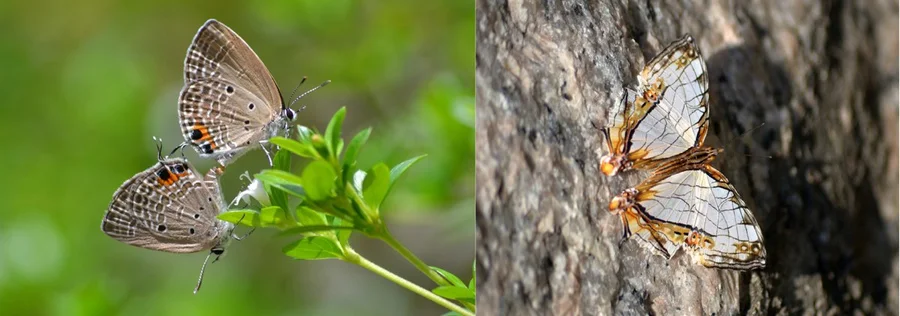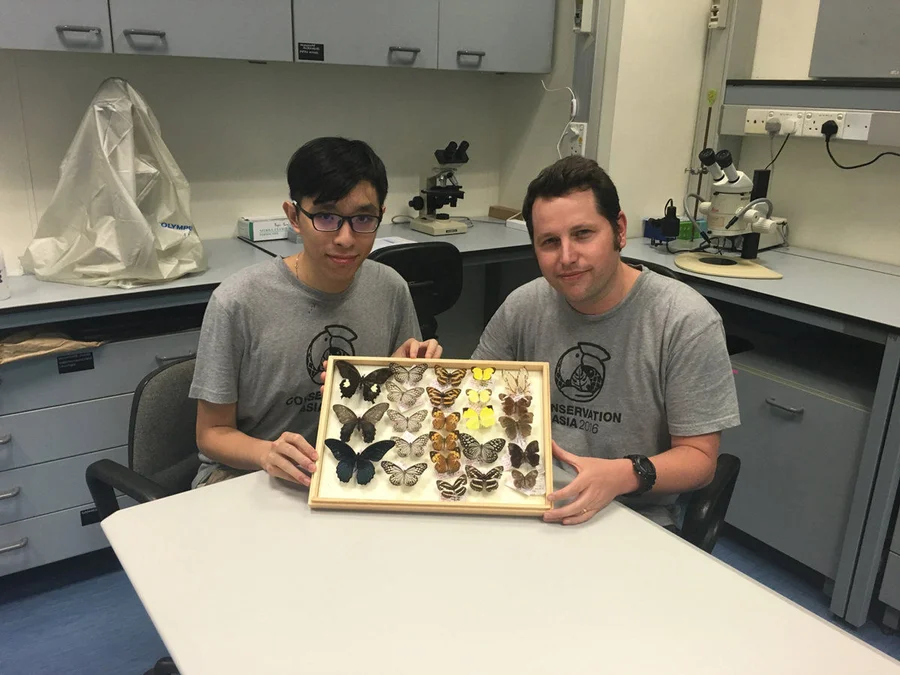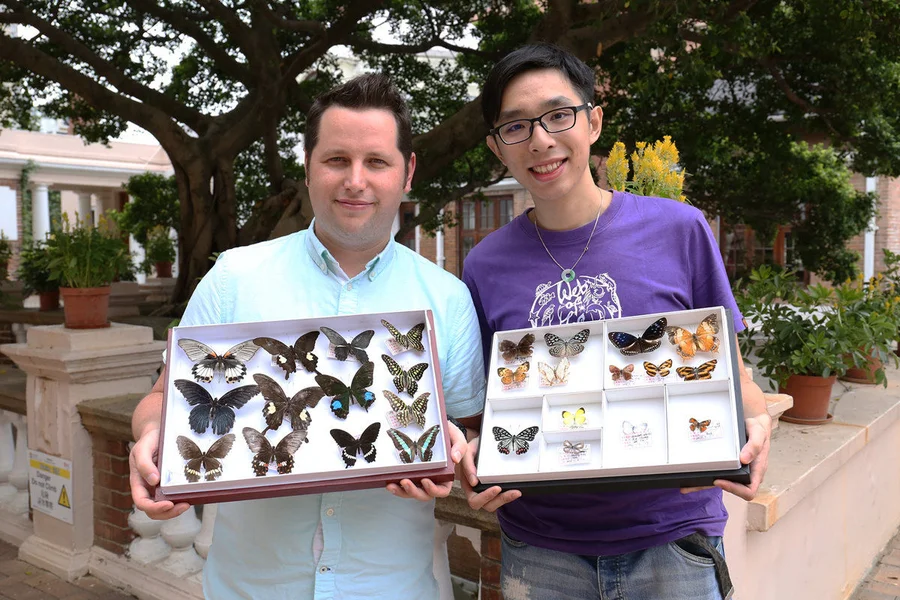
Hong Kong is home to a dazzling diversity of over 250 butterfly species, many of which can be found during a casual walk through urban parks in the city. Nonetheless, while urban areas are not often regarded as important habitats for them, what determines which butterfly species end up in different parks? In recent years, there is an increasing emphasis on the importance of urban green spaces as habitats for greater biodiversity. Dr Timothy Bonebrake, Assistant Professor at the School of Biological Sciences and head of the Global Change and Tropical Conservation Laboratory, the University of Hong Kong (HKU) and his PhD student Mr Toby Tsang Pak-nok, set out into the urban wilderness to find out how parks serve as a habitat for butterflies. Their recent research published in the journal Landscape Ecology revealed that environmental factors such as plant cover and floral density (how many flowers there are in a given park) were important determinants of communities of common urban butterfly species, while spatial properties (such as whether a given park is close to habitats of rare butterflies) were important for rare species.
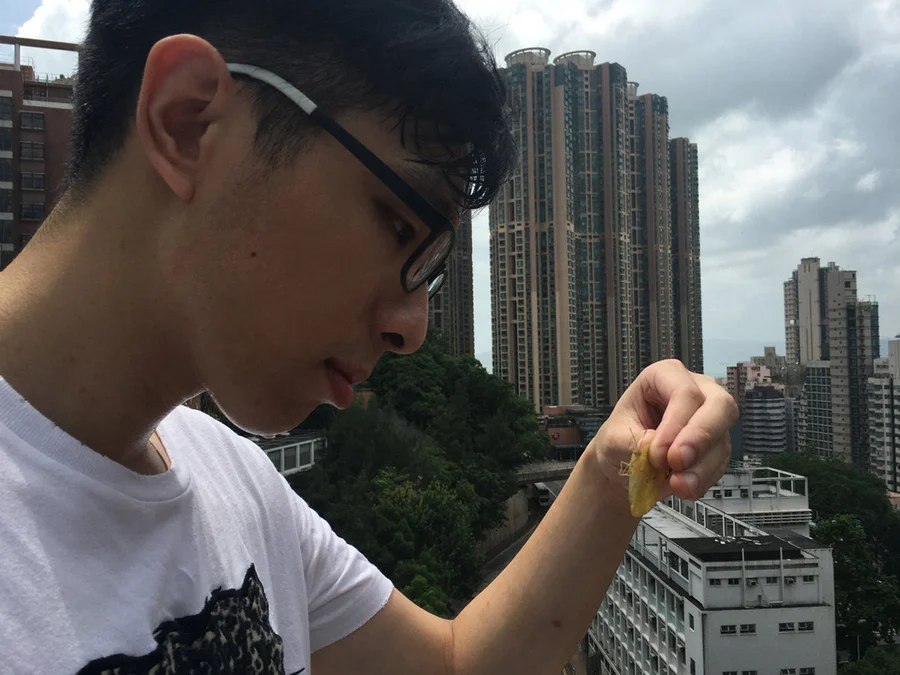
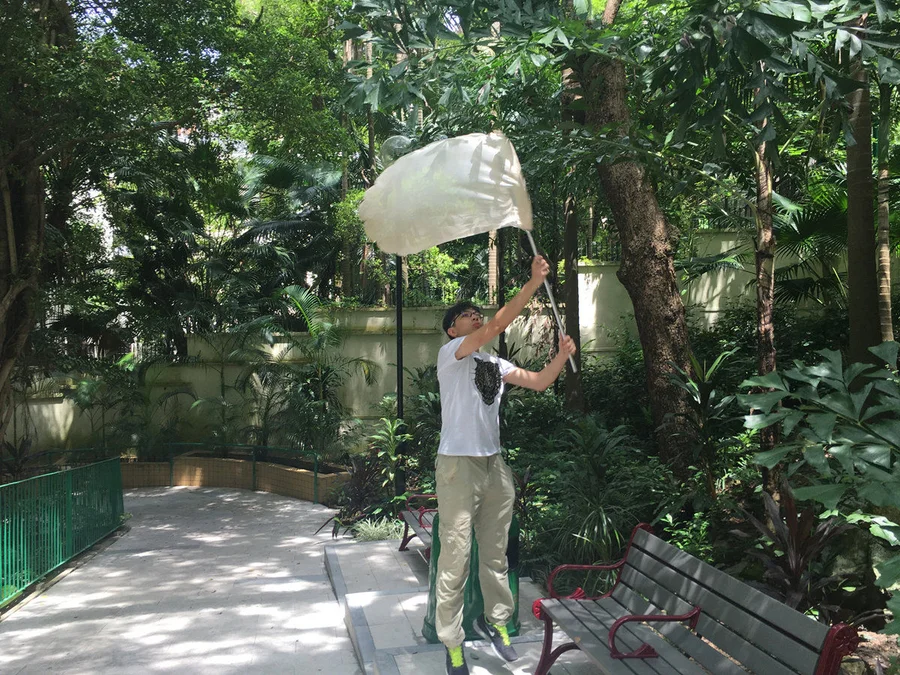
Mr Tsang spent several months walking through the parks of Kowloon counting all of the butterflies that crossed his path. In total he counted 1,485 individuals and 51 species during his surveys. One of the patterns he noticed early in the research was that some species, like Pseudozizeeria maha, were very common and could be seen on most days. On the other hand, he also found that some species were very rare in urban parks, such as Charaxes bernardus which was only seen once during the entire study period in one park (Kowloon Tsai Park).
When analyzing park features and splitting the butterfly communities into common and rare species, Dr Bonebrake and Mr Tsang discovered that the two sets of communities were determined by different processes. Seeing common species in a park was likely the result of environmental influences such as floral abundance or woody plant cover within 500 metres around the park. While seeing a rare species was more likely to be the result of whether habitat close to the park could enable that species to disperse to that park.
A table summarizing the most common and rarest species in urban parks of Hong Kong:
|
Top-5 Most Common Species |
Top-5 Rarest Species |
|
Pseudozizeeria maha |
Charaxes bernardus |
While urban areas are not often considered important habitats for species, urban ecology studies such as this one are increasingly emphasizing the importance of urban green spaces as habitats for a wide variety of biodiversity. For example, for common butterfly species in Hong Kong urban parks, Dr Bonebrake and Mr Tsang found that more flowers and greater plant cover around parks were associated with higher numbers of species.
The results of this study also suggest that urban park environmental design likely affects which common butterfly species anyone might see on a given day. However, the encouragement of rare species establishment in urban parks through different designs might be more difficult. “A prominent feature of urban ecosystems is the high degree of disturbance, including insect spraying, vegetation trimming, and human traffic through the parks,” noted Dr Bonebrake. “In this case, whereas in more natural ecosystems rare species might be able to establish populations in small habitat patches, we find that rare species in Hong Kong urban parks are likely unable to persist in the parks long-term. Furthermore, our research shows that spatial context and landscape configuration should be considered in the conservation of rare species in urban environments.”