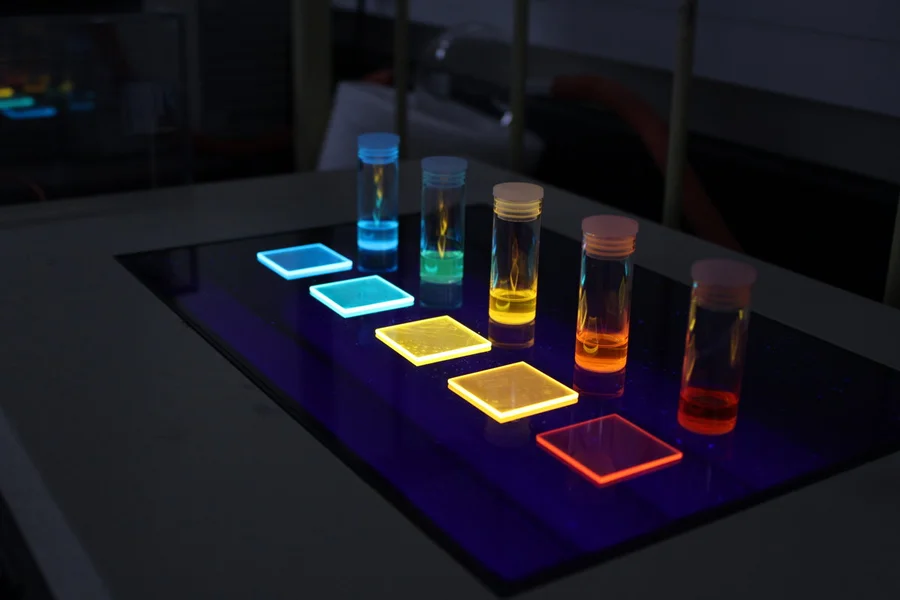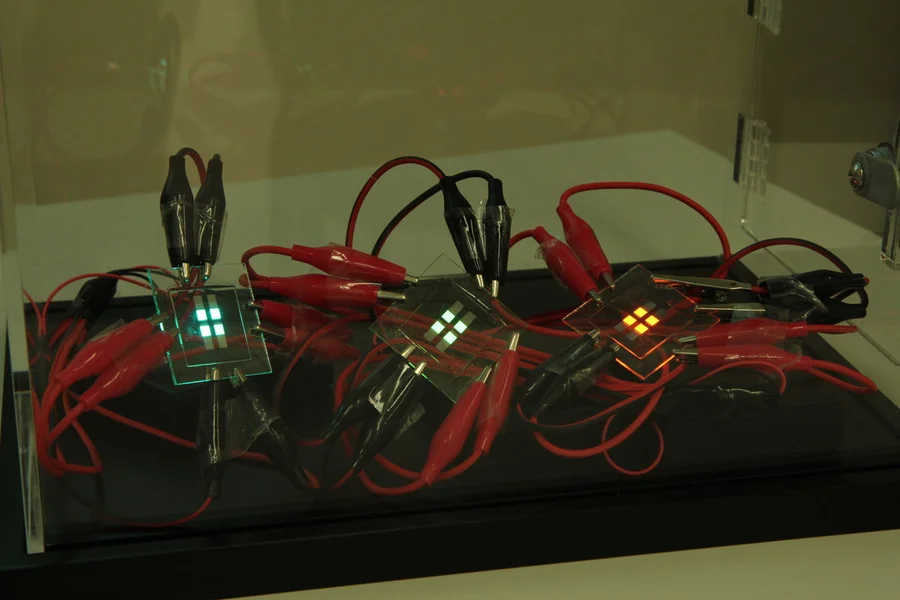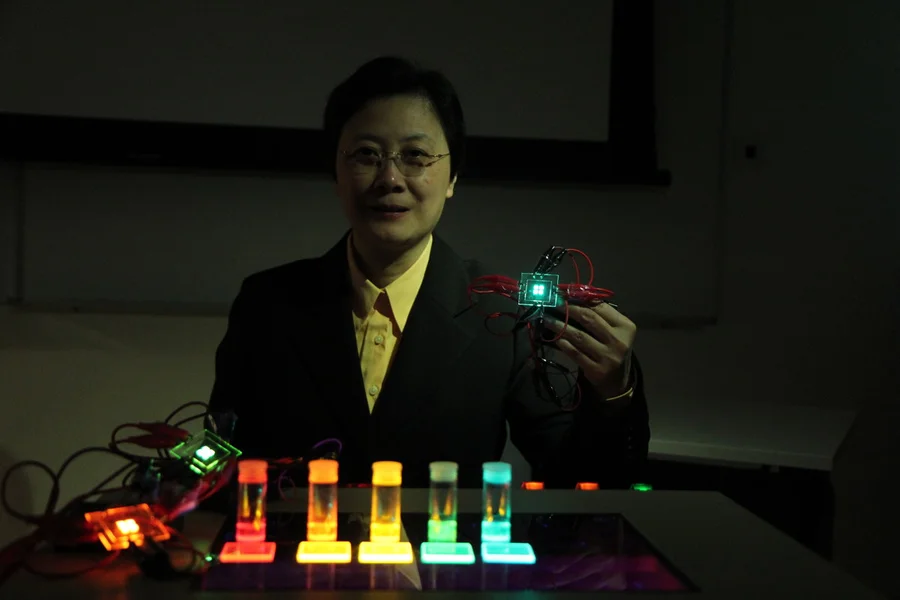
Recent advances in the design of high-performance phosphorescent emitters have led to the leap-forward development of organic light-emitting devices (OLEDs) and their applications in commercial electronic products, including computer monitors, cellular phones, and high-density televisions. Nowadays, almost all commercially available OLED materials are iridium(III) phosphors, with most of the key patents held by foreign countries, including US and Europe. This currently takes up more than 90 % of the OLED market, and the industry usually needs to pay high licensing fees for mass production.
With the funding support of RGC Theme-based Research Scheme, a multi-institutional team that integrates multi-disciplinary efforts from the University of Hong Kong (HKU), the Hong Kong University of Science and Technology (HKUST), Hong Kong Baptist University (HKBU), the Hong Kong Polytechnic University (PolyU) and City University of Hong Kong (CityU), and the complementary expertise of chemists, physicists, materials scientists, and device engineers has been established to address the grand challenges related to energy.
Particularly, Professor. Vivian W.W. Yam and Professor C.M. Che from HKU are responsible for the design and synthesis of highly efficient phosphorescent materials; Professor F.R. Zhu from HKBU and Professor K.M. Ng from HKUST are responsible for the development of high-performance organic solar cells; Professor H.S. Kwok from HKUST and Professor C. Surya from PolyU are responsible for the development of industrial-competitive technologies for large-area devices; while Professor C.S. Lee from CityU is responsible for the interfacial and dynamic studies.
With the dedicated efforts of the team during these five years, a significant impact to the fields of OLEDs and organic photovoltaics (OPVs) has been made. Especially, the team has tackled the challenges for commercialization with the generation of more than 260 high-impact publications, Hong Kong-owned intellectual rights, patents and technological know-how that are industrial-competitive.