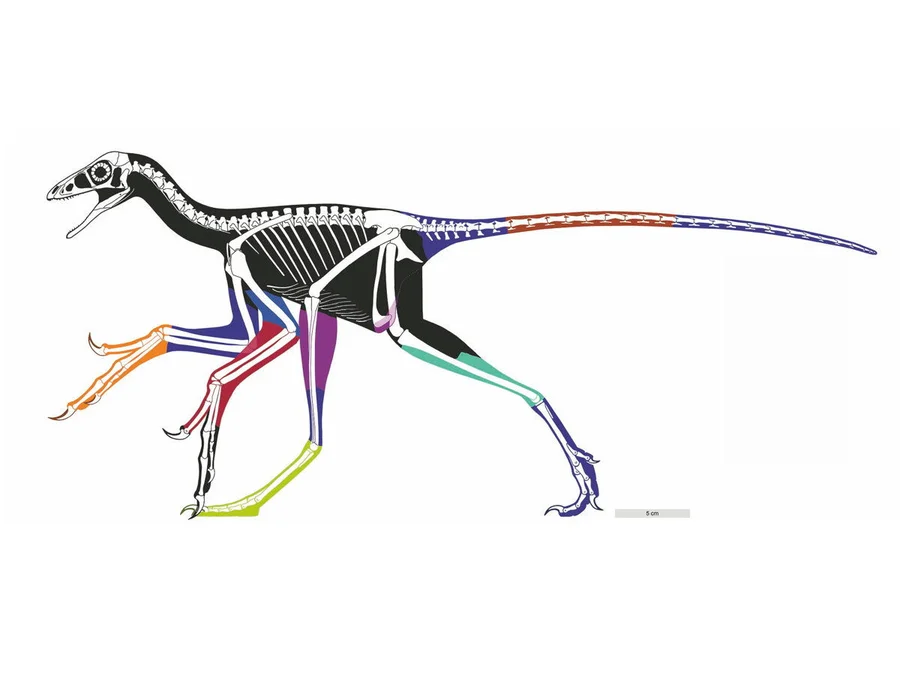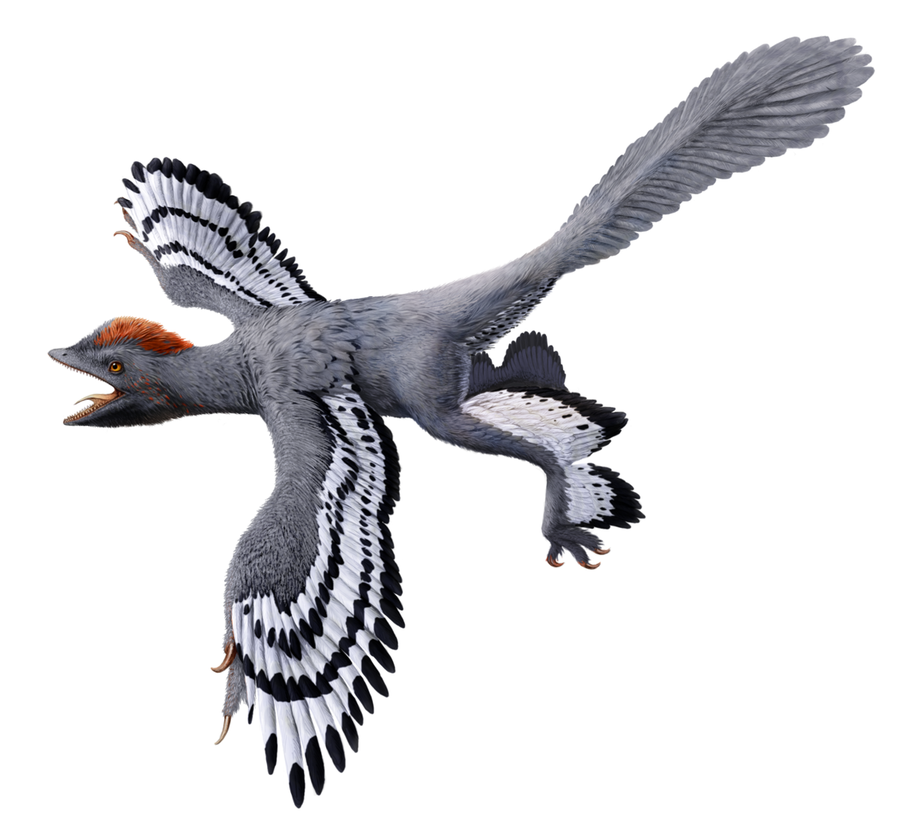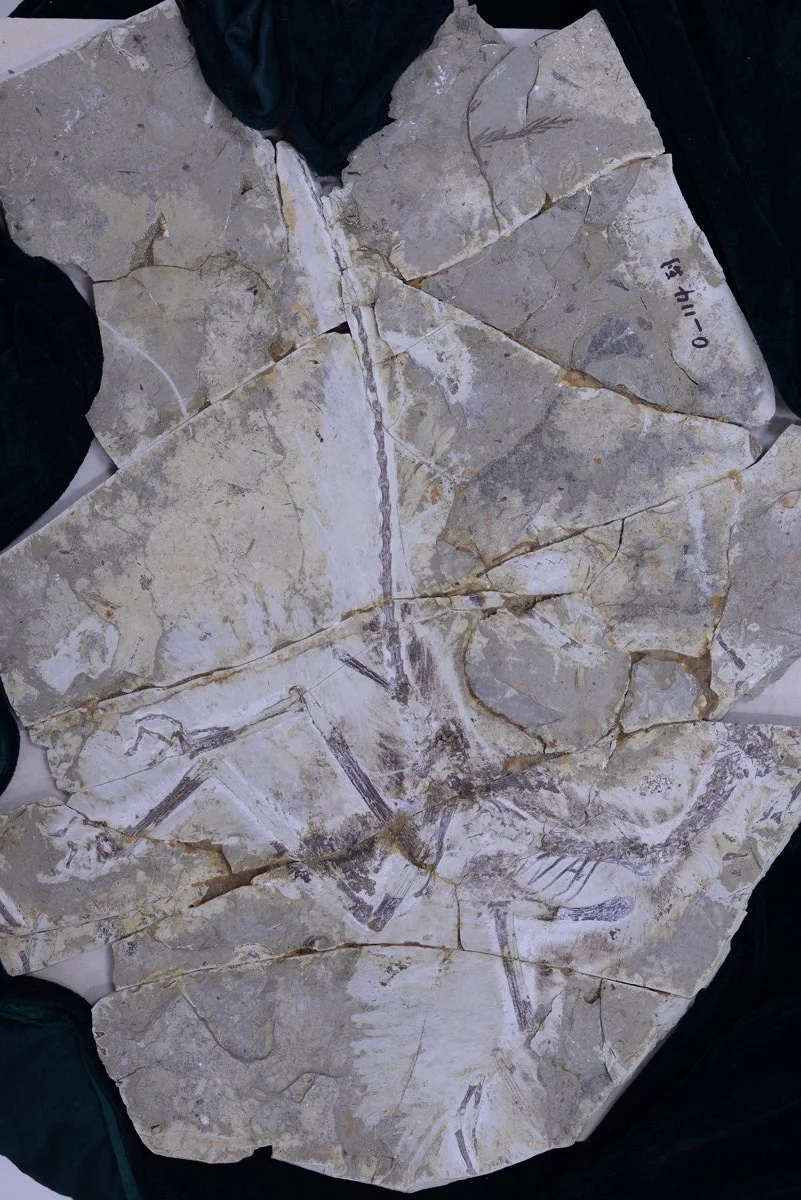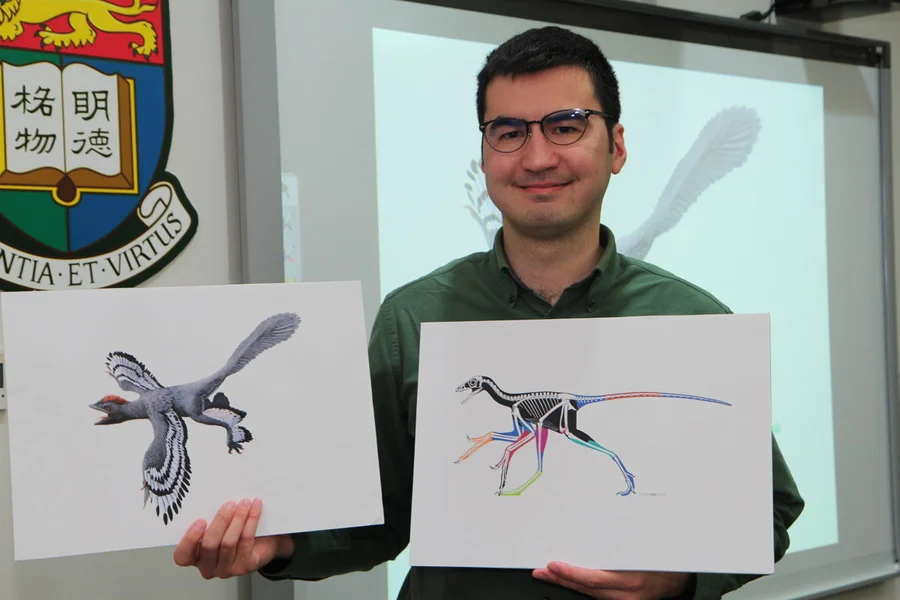
Until now it has been hard to get an accurate idea of the shape of a dinosaur from its fossilised remains, as only their bones are usually preserved. Using a new technique, Dr Michael Pittman from the Department of Earth Sciences, the University of Hong Kong and his collaborators reconstructed the first highly detailed body outline of a feathered dinosaur based on high-definition images of its preserved soft tissues (Fig. 1).
This ground breaking work was published in Nature Communications on February 28, 2017 (Tuesday), London time.
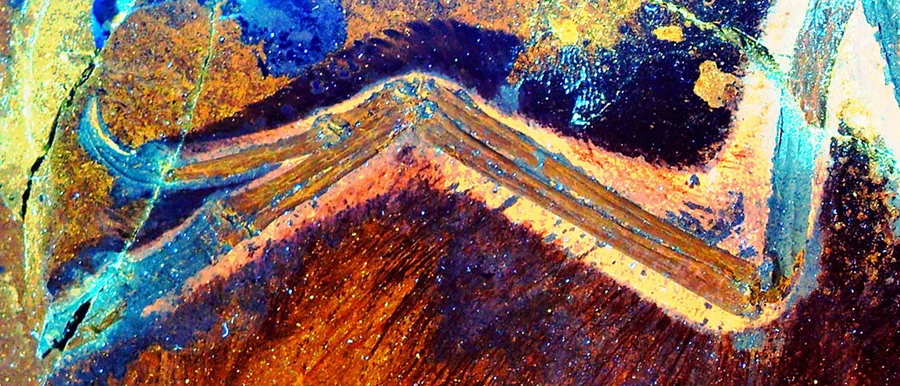
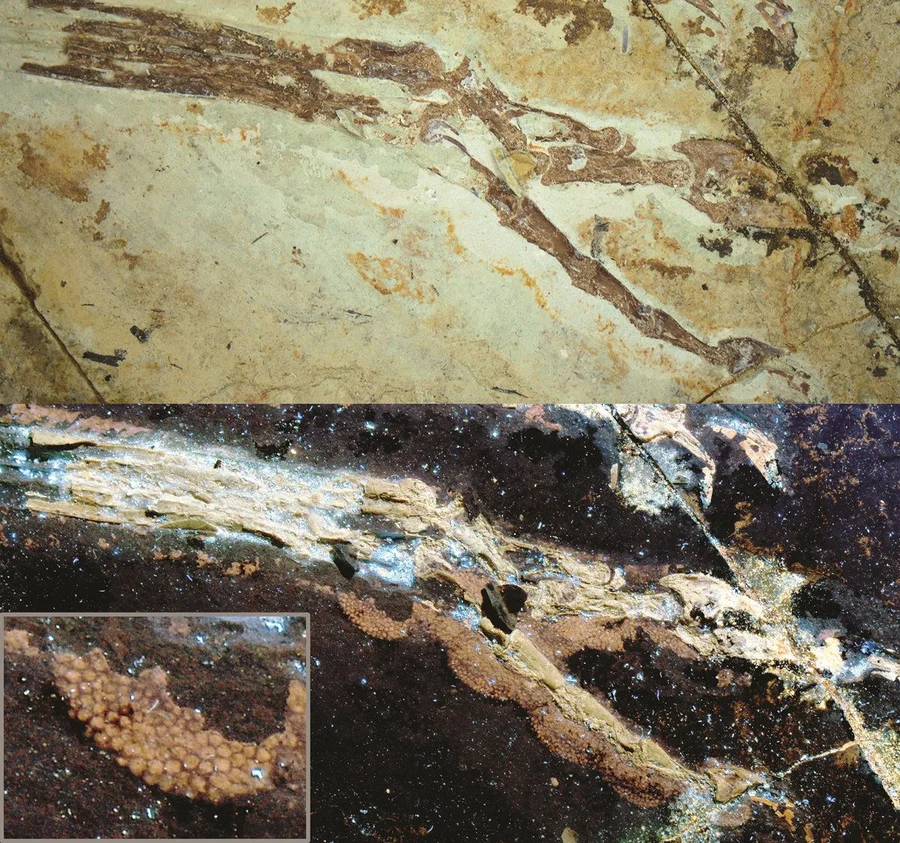
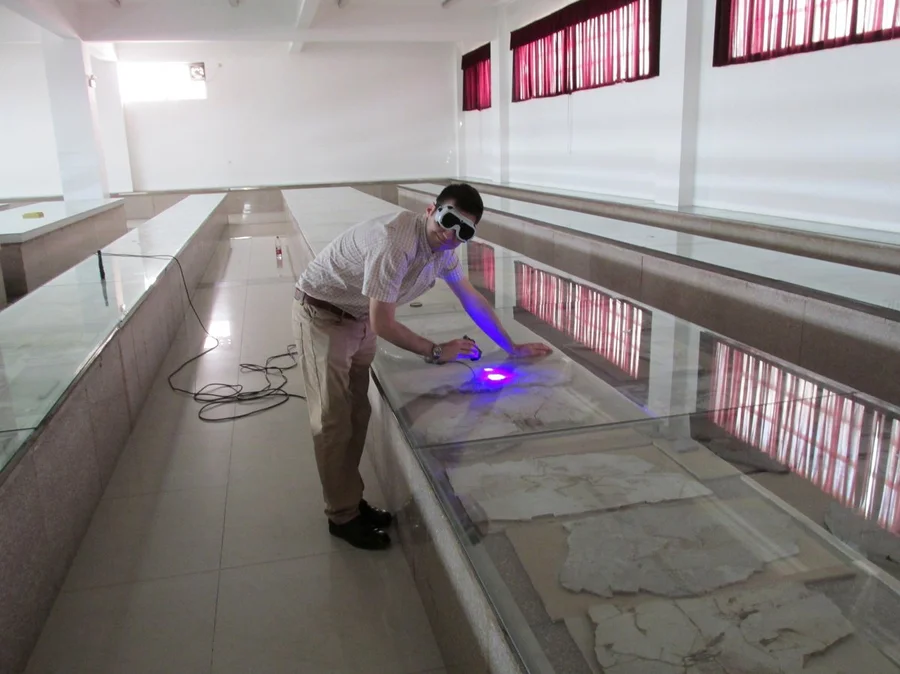
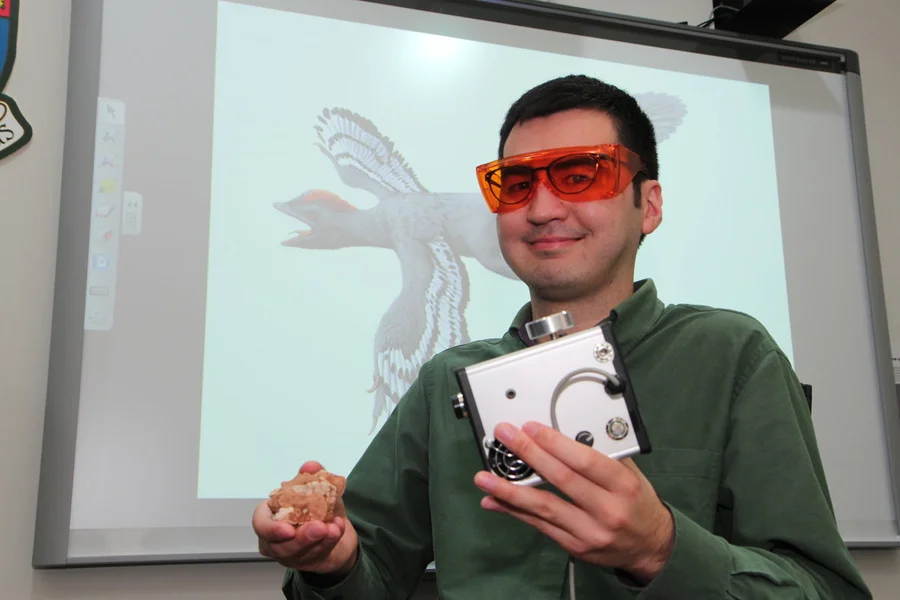
Laser-stimulated fluorescence (LSF) is a revolutionary new technique using high power lasers that makes unseen soft tissues preserved alongside the bones, literally “glow in the dark” by fluorescence (Figs. 2 & 3). The technique developed by collaborator Tom Kaye of the Foundation for Scientific Advancement, scans the fossils with a violet laser in a dark room. The laser “excites” the few skin atoms left in the matrix making them glow, to reveal what the shape of the dinosaur actually looked like (Fig. 4). “For the last 20 years we have been amazed by the wondrous feathered dinosaurs of Northeastern China. However, we never thought they would preserve soft tissues so extensively,” said lead author and palaeontologist Dr Michael Pittman.