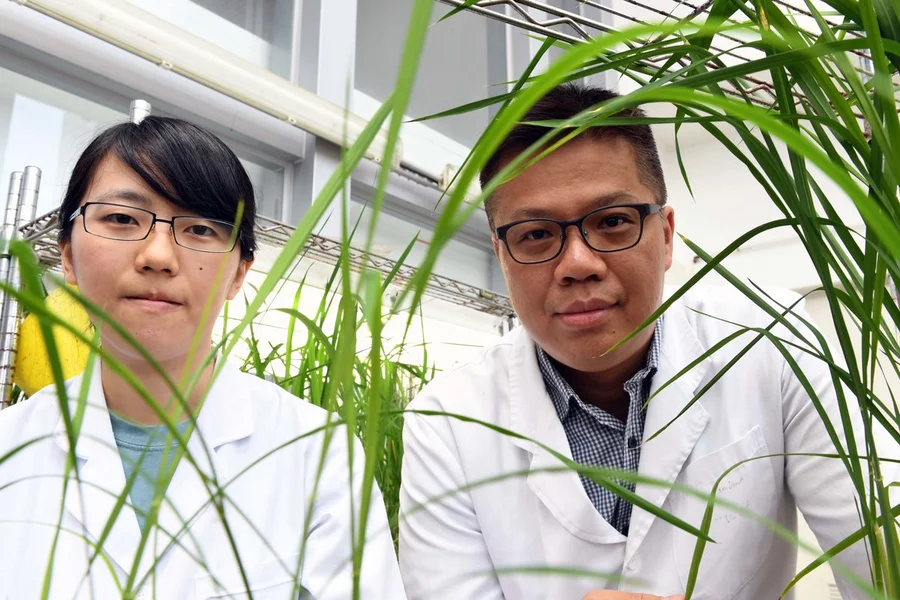
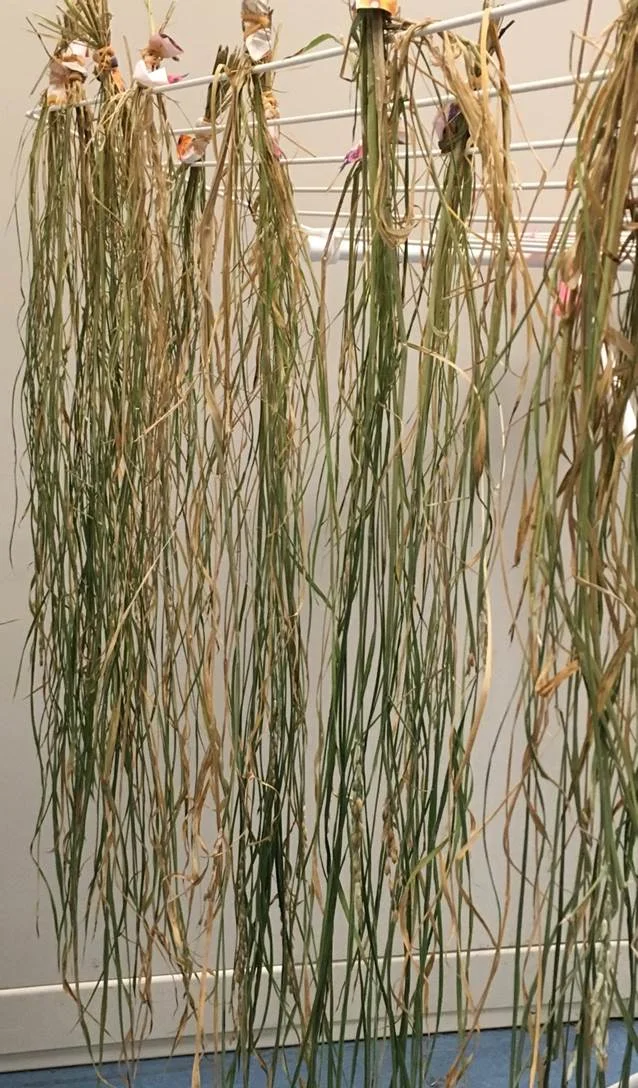
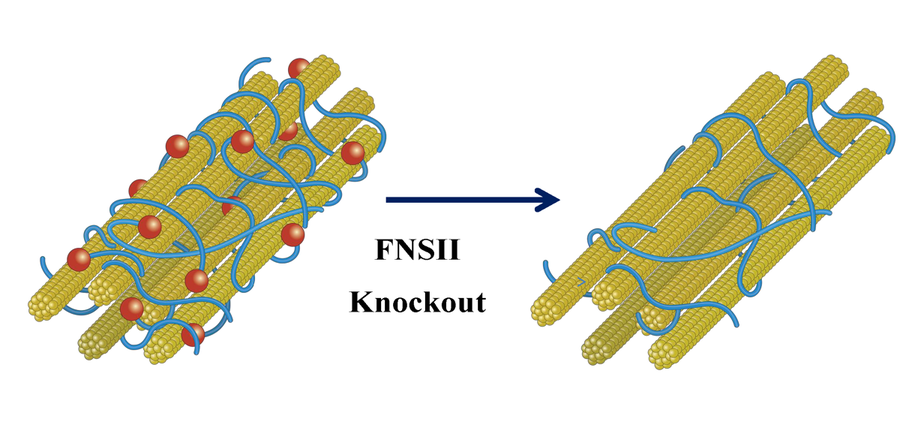
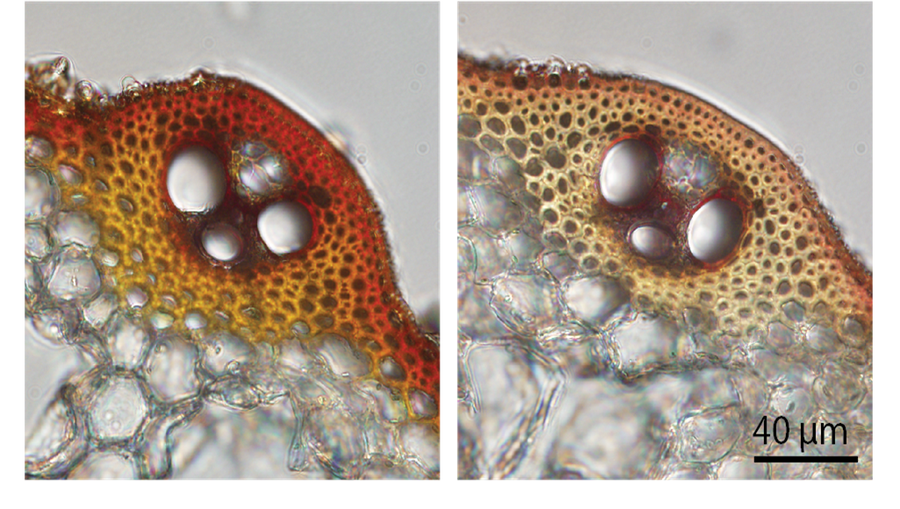
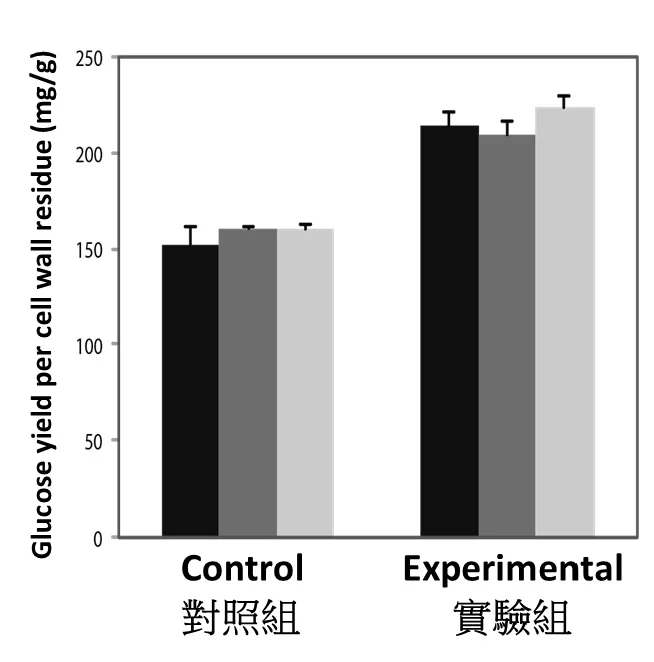
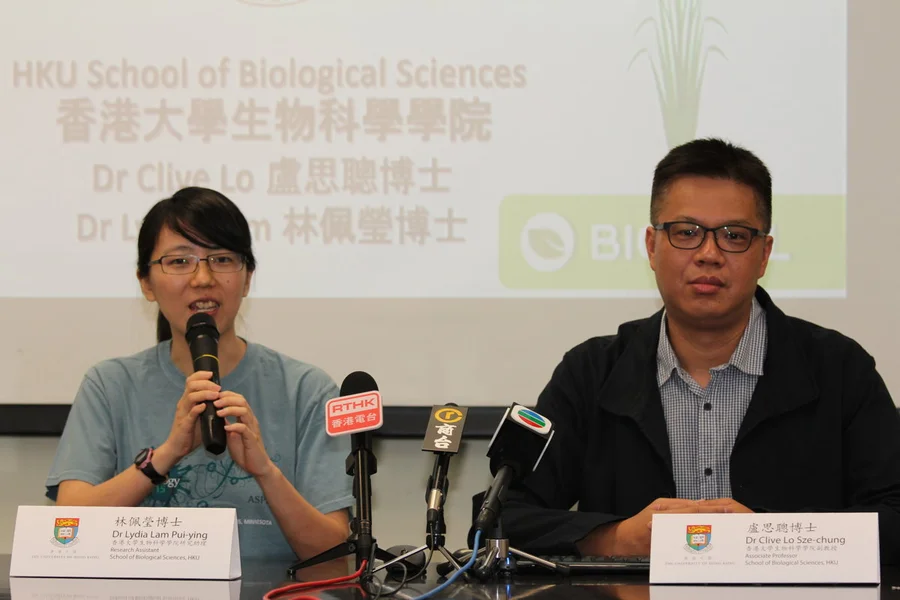
“This is the first demonstration of the reduction of cell wall lignin content in rice straw by the disruption of tricin production”, said Clive Lo, “Importantly, there are no negative impacts on rice growth and productivity.” As plants in the grass family all contain tricin-bound lignin, this strategy can be applied to other cereals like maize, wheat, and barley as well as grass species (e.g. sorghum and switchgrass) cultivated around the world exclusively for ethanol production, so that they can be utilized more efficiently as raw materials for biofuel.
Dr. Lydia Lam has been recently awarded the JSPS Postdoctoral Fellowship for Research in Japan by the Japan Society for the Promotion of Science and will start her postdoctoral research at Kyoto U this September. She said, “I feel very delighted and honored to conduct a research project that could benefit society. Also, as a Hongkonger, I am always trained to work quickly and efficiently. During the eight-month research experience at Kyoto U, I was particularly impressed by the students there. They performed experiments with extreme care and precision. When I am doing research today, I always ask myself to do better than perfect in addition to seeking speed and efficiency.”
Link of the article in Plant Physiology :
“Disrupting Flavone Synthase II Alters Lignin and Improves Biomass Digestibility”
https://www.plantphysiol.org/content/early/2017/04/06/pp.16.01973.full.pdf+html
For the video clip about this research (with subtitles and name cards), please click here.
About the research team:
Dr Clive Lo is an Associate Professor in the School of Biological Sciences, the University of Hong Kong. His laboratory has been elucidating biosynthesis pathways of flavonoids in cereal crops for applications in metabolic engineering. His research projects are supported by the Research Grants Council of Hong Kong.
Dr Lydia Lam joined the Summer Science Institute during her secondary school years and was then inspired and determined to study Biotechnology. She was admitted to HKU in 2008 and received her Bachelor of Science (First Class Honours) Degree in Biotechnology. Afterwards, she was awarded the highly competitive Hong Kong PhD Fellowship and completed her PhD study in December 2016. Previously Lo, Lam, and other lab members published two papers in Plant Physiology on tricin biosynthesis pathway in rice, providing important theoretical basis for the above investigation.
Dr Yuki Tobimatsu is an Associate Professor in the Laboratory of Metabolic Science of Forest Plants & Microorganisms, Research Institute for Sustainable Humanosphere, Kyoto University, Japan. His research areas include structure and formation of plant cell walls, lignin chemistry and biochemistry, and molecular breeding of biofuel crops.
Media enquiry:
Dr Clive Lo, School of Biological Sciences (tel: 2299 0337; email: clivelo@hku.hk);
Ms Rhea Leung, Communication and Public Affairs Office (tel: 2857 8555/ 9022 7446; email: rhea.leung@hku.hk);
Ms Cindy Chan, Faculty of Science (tel: 3917 5286/ 6703 0212; email: cindycst@hku.hk).