Stereotactic neurosurgery is one of the treatment to a variety of movement and neuropsychiatric disorders, such as Parkinson’s disease (PD), essential tremor and major depression. It involves a technique that can locate targets of surgical interest using an external positioning system, which is widely applied in brain biopsy, tumor ablation, drug delivery, as well as deep brain stimulation (“DBS”). Parkinson’s disease alone is the second most common disease of the nervous system after Alzheimer’s disease, and is projected to affect over 8.7 million people worldwide by 2030. As such, any improvement to this surgery would benefit a large population.
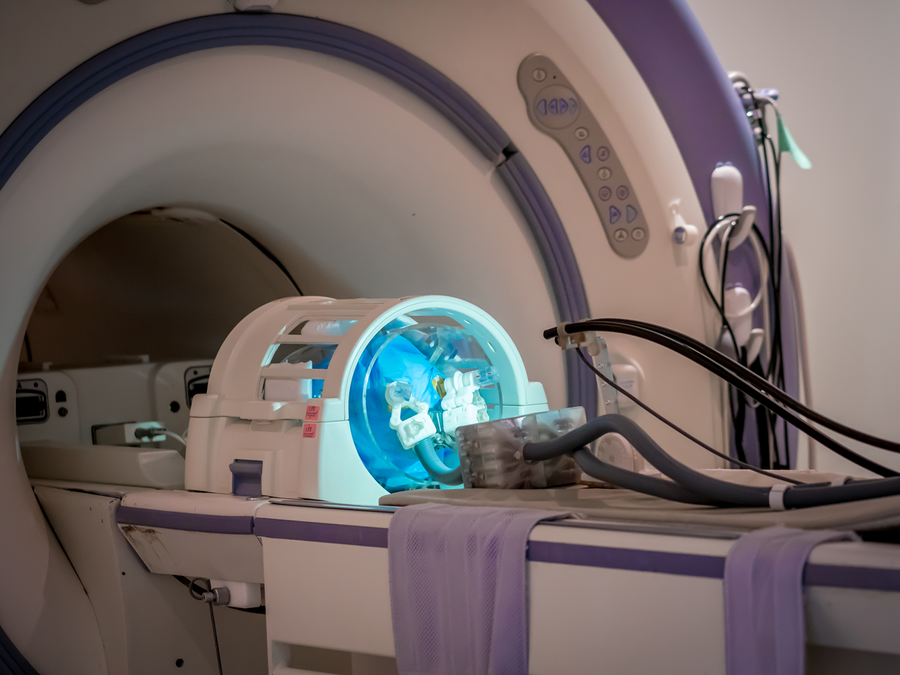
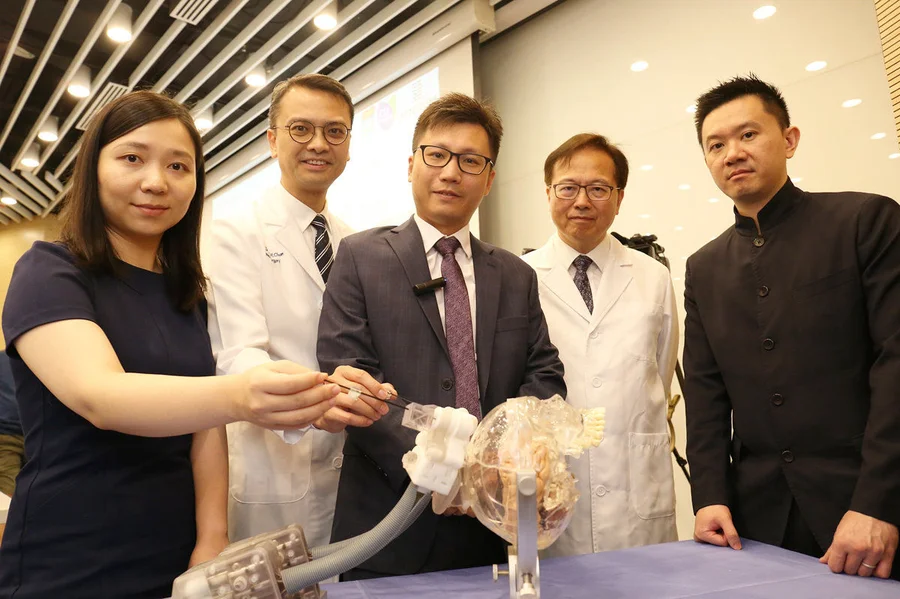
A HKU Mechanical Engineering team led by Dr. Kwok Ka-wai recently designed the first neurosurgical robotic system capable of performing bilateral stereotactic neurosurgery inside a magnetic resonance imaging (“MRI”) scanner. The team also conducted pre-clinical validation of the system with CUHK neurosurgeons, Dr Danny Chan Tat-ming and Professor Poon Wai-sang. This innovative technological breakthrough can facilitate the treatment of Parkinson’s disease and other neuropsychiatric disorders.
DBS therapy, like a heart pacemaker, can deliver electrical signals through implanted electrodes to the deep brain targets. It helps to restore normal nerve cell activity. This surgery is tremendously demanding on accuracy, by targeting only the tiny nucleus structures and not damaging the surrounding critical tissue. Without the intra-operative updates of a surgical “roadmap”, the brain may shift after the skull is opened and inevitably lowers the targeting accuracy. Conventional DBS is performed while the patient is awake under local anesthesia. Surgeons have to rely on verbal or physical interactions with the patients to ensure the electrode placement is going well. These surgical complications motivated the HKU-led team to develop a compact robot guided by MRI. This facilitates less invasive stereotactic procedures on the patient under general anesthesia, as surgeons could accurately control and evaluate the stereotactic manipulation bilaterally to the left and right brain targets in real time.