Our History

1887 - 1945: THE EARLY YEARS

Today, the University of Hong Kong (or HKU, as it is familiarly known to students, staff, and alumni) is the oldest tertiary education institution in Hong Kong. But a little over a century ago, it was just a shared dream among a small circle of administrators, philanthropists, and educators.
1887

The Hong Kong College of Medicine is founded. Among its earliest students is Dr. Sun Yat Sen, often referred to as the founder of modern China.

1908

The governor of Hong Kong, Sir Frederick Lugard, first proposes establishing a university in Hong Kong. His associate, the wealthy businessman Sir Hormusjee Mody, makes a significant donation to the cause.

1910

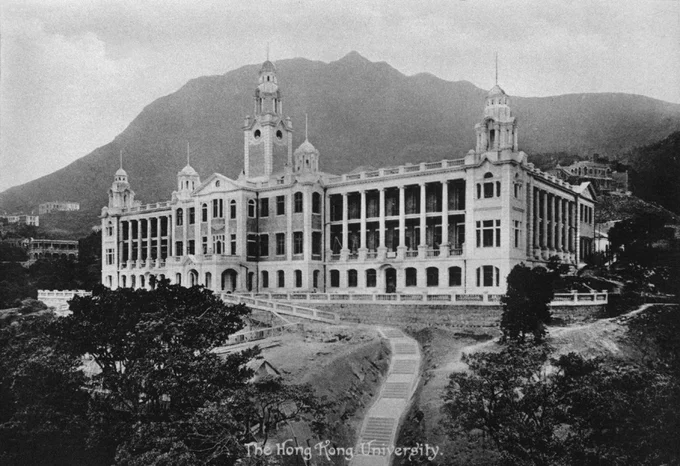
Sir Frederick Lugard lays the foundation stone of what would become HKU.

1911

The University of Hong Kong is incorporated in Hong Kong as a self-governing body of scholars.

1912

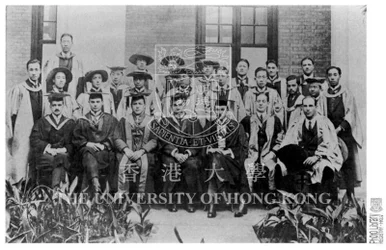
HKU welcomes its first students, who may enroll in one of its three faculties: Arts, Engineering, and Medicine, the last of which evolved from the Hong Kong College of Medicine. 

1913

The University is granted a shield and a motto by the College of Arms. Learn more about the history of HKU’s visual identity and how to display it here

1916

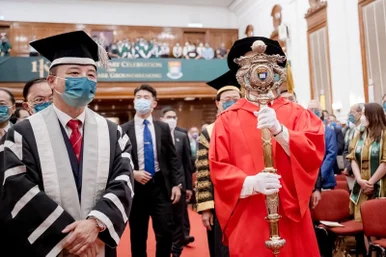
The University holds its first congregation, with 23 graduating students. 

1921

The first female students are admitted to HKU.

1932

The Fung Ping Shan Library is established.

1937

Queen Mary Hospital opens as the University’s teaching hospital – a role it continues to serve today. 

1939

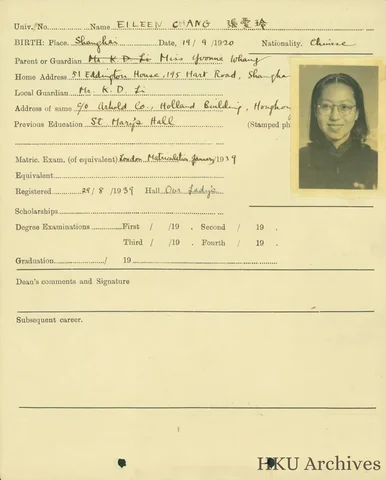
The Faculty of Science is established. Eileen Chang enrolls at HKU, but the war interrupts her studies. 

1941-1945

The University is damaged during the Japanese invasion of Hong Kong. Classes will not resume until after the war. 

1946 - 1999: GROWING WITH HONG KONG

Despite the scars of war, HKU bounced back quickly in the second half of the 20th century, introducing new programmes, establishing a Graduate School, and growing its student body. 
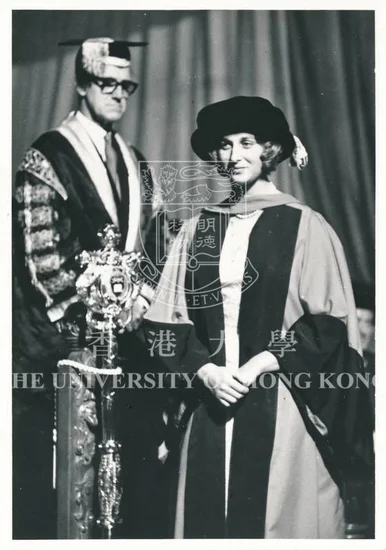
1951

The University begins offering architecture classes for the first time. 

1956

In response to growing demand, HKU establishes a Department of Extra-Mural Studies to provide continuing education services to adult students. 

1961

HKU celebrates its Golden Jubilee. The University now has a student body of 2,000, up 400% in just 20 years.

1967

The Faculty of Social Sciences is established.

1969

The Law Department is established. 

1982

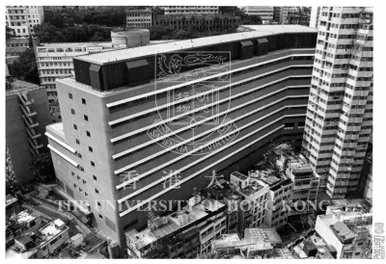
The Faculty of Dentistry is established. Based at Prince Philip Dental Hospital, it remains Hong Kong’s only faculty for training dental professionals.

1984

The Faculties of Architecture and Education are established. The Law Department becomes the Faculty of Law. 

1990

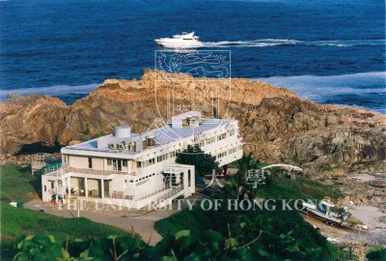
The Swire Marine Laboratory opens at Cape d’Aguilar. It will be expanded and relaunched as the Swire Institute of Marine Science in 1994.

1992

The Department of Extra-Mural Studies becomes the School of Professional and Continuing Education. It remains Hong Kong’s largest tertiary institution for continuing education.

1998

The Graduate School is founded.

2000 - Today: Innovation in the New Millennium

From SARS to COVID-19, molecular bonds to the speed of light, HKU has emerged as one of the world’s leading universities, pioneering impactful, life-saving research across a host of cutting-edge fields. 
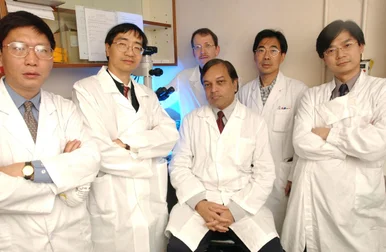
2001

The Faculty of Business and Economics is established, becoming HKU’s tenth Faculty.

2002-03

As SARS sweeps across Asia, researchers from the University of Hong Kong play a leading role in its treatment and prevention, sequencing the virus’ genome and identifying the novel ways in which it spread.

2011

The HKU-Shenzhen hospital is formally established, to open the following July. The University also establishes the HKU Shenzhen Institute of Research and Innovation. 

2012

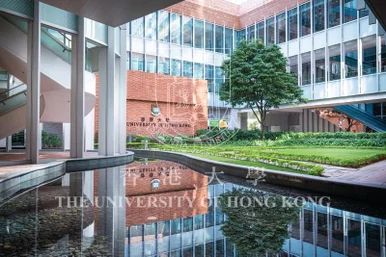
HKU launches its new four-year undergraduate curriculum and opens its new Centennial Campus as the University prepares for a 40% increase in its student body.

2014

The HKU MTR station opens, connecting the University to Hong Kong’s metro system for the first time.

2015

HKU becomes the world’s first university to launch a UN HeForShe campaign, spreading awareness about gender discrimination. 

2020

The first COVID-19 cases are reported in Hong Kong, and HKU researchers and professionals again take the lead in responding to the virus. 

2021

Construction on the new Pokfield Campus begins, part of a major expansion of campus facilities. The Tech Landmark will also begin construction the following year. 

2023

Nobel Prize-winning chemist Fraser Stoddart joins HKU.

2025

HKU, which has grown to over 40,000 students, is named the top university in Asia by QS.